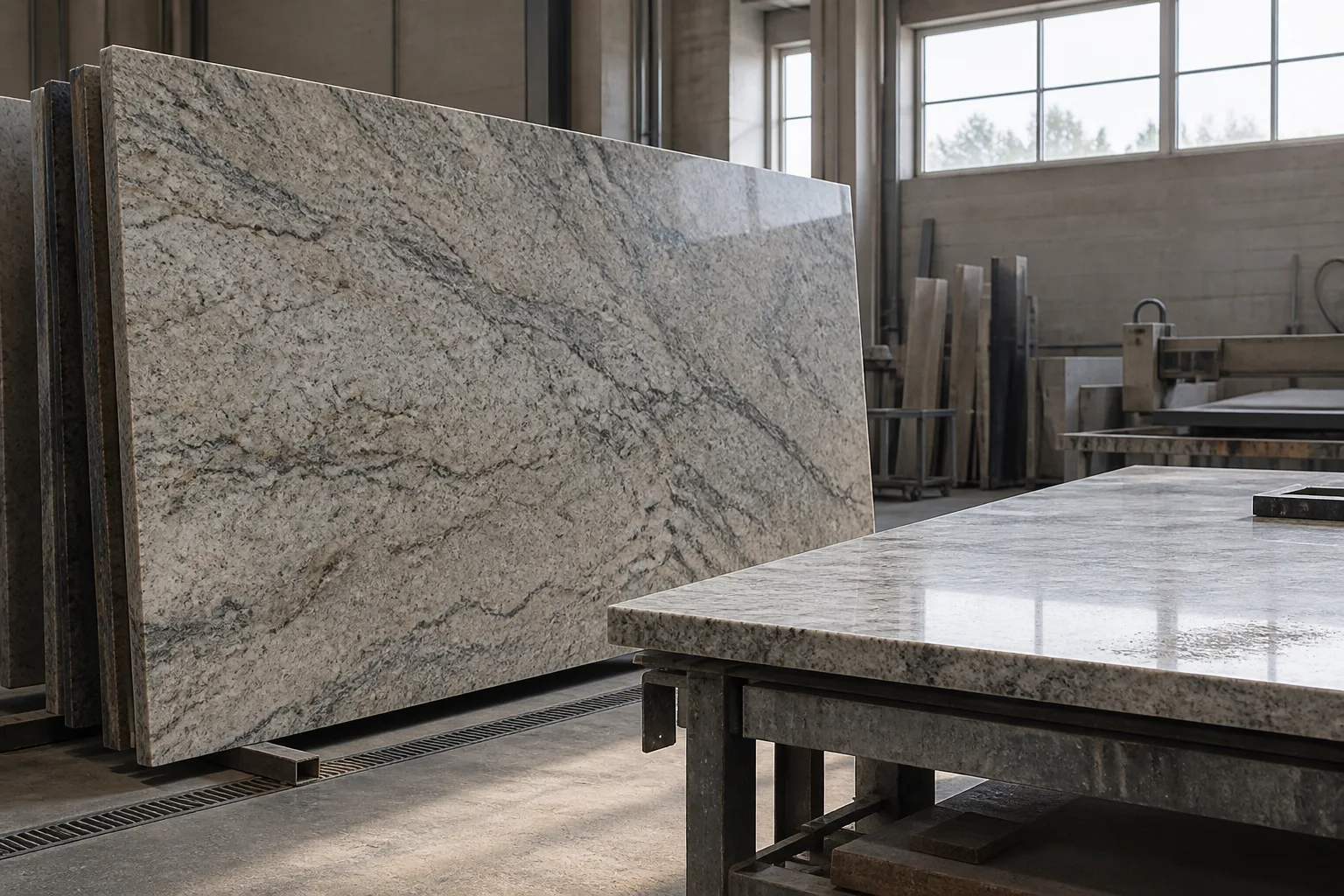
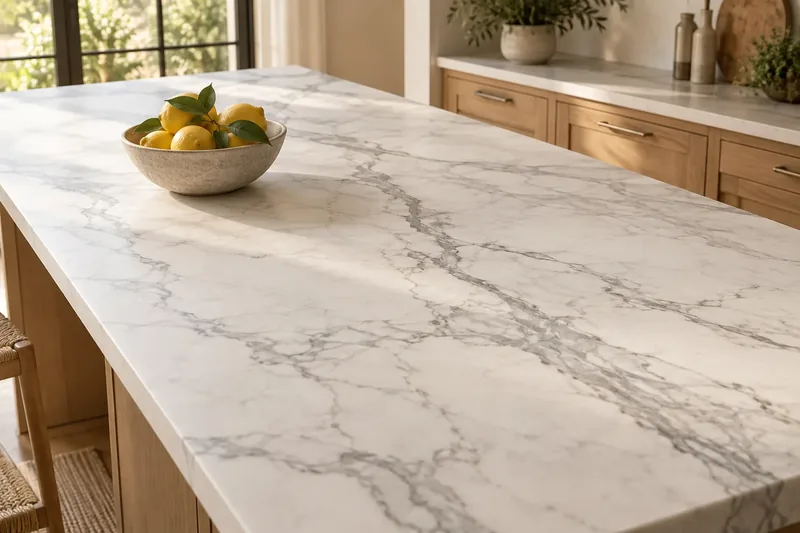
Model and spec sheet
We work from the maker's drawing for your exact unit. If it is backordered, the published sheet is used and we say so.

Temecula Custom Countertops is your source for countertop cutouts, including cooktop and appliance openings for homes in Temecula, CA and across Riverside County. Every opening is sawn in our shop to the maker's template for your exact model, with rounded inside corners so the stone keeps its strength.
Get a free measure or a bid
A cooktop, a range top or a built-in appliance comes with its own cutout drawing, and stone gives no second chance once it is sawn. Too wide and the unit sags or leaves a gap, too tight and it will not drop in. We follow the published dimensions for your model, not a typical size.
The same crew that takes the template cuts the slab and sets it on your cabinets. Our jobs span houses in Temecula, Fallbrook and French Valley, plus commercial kitchens where the equipment list runs longer.
How we work
Homeowners get a free measure. Wineries, restaurants, offices and builders get a bid from their drawings.
Cooktops are the most common, but they are far from the only appliance that asks for a hole in your stone. Each type has its own opening, clearance and fixing method, so the first step is a list of everything that will sit in or on the top.
Slide-in ranges need no cutout at all, since they sit between cabinets, but the stone beside them still has to be measured to the unit so the gap stays tight.
A cutout is the thinnest part of any counter, so we study the layout before the saw is switched on. Most problems are found on paper at the template, where fixing them costs nothing.
We work from the maker's drawing for your exact unit. If it is backordered, the published sheet is used and we say so.
We measure how much material remains to the front edge, the sink and any seam, because narrow strips crack.
The base cabinet frame has to carry the appliance and leave the required clearance underneath.
Gas lines, power and air space are checked so the finished opening does not block any of them.
Square inside corners crack, and rounded ones last. When stone flexes under load or temperature change, stress gathers at any sharp inside angle, and a hairline starts there. A generous radius spreads the same force over a wider area and the stone carries it.
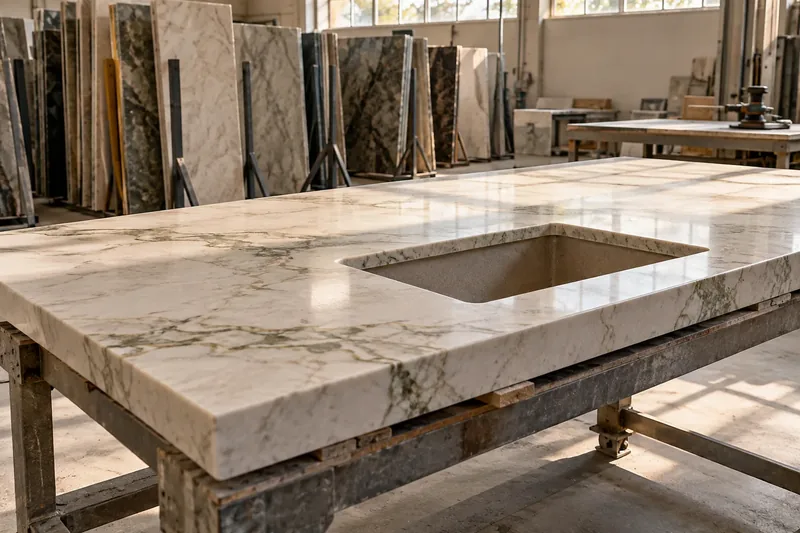
We saw each opening in the shop on a fully supported slab, then grind the corners to a radius that still lets the appliance seat against the straight edges. Cutting on site over the cabinets is a poorer option, because the slab flexes and the blade can wander at the very moment the corner is being turned.
The same thinking applies to the stone left between openings. A cooktop beside a sink can leave a strip only a few inches wide, and that strip is the weak link of the whole top.
Moving a cooktop a few inches at the template is far cheaper than a split slab after install.
A flush-mount appliance sits level with the stone, so the opening needs a rebate routed into the underside to hold the rim. That is precision work on a router table, and it cannot be done well while the top is resting on cabinets. We do it in the shop, on quartz, granite and porcelain alike, checking the fit against the unit's rim before the top is delivered.
Downdraft vents add a narrow slot behind the burners, and that slot sits close to the main cooktop opening. Two cuts that near one another leave a thin bridge of stone, so we check what remains and add support beneath it when it is slim.
Thick or very hard stone, such as dense quartzite and porcelain, takes longer to cut and needs the right blade, which is another reason these jobs belong in a workshop.
We confirm each of these at the measure so there is no surprise when the top arrives.
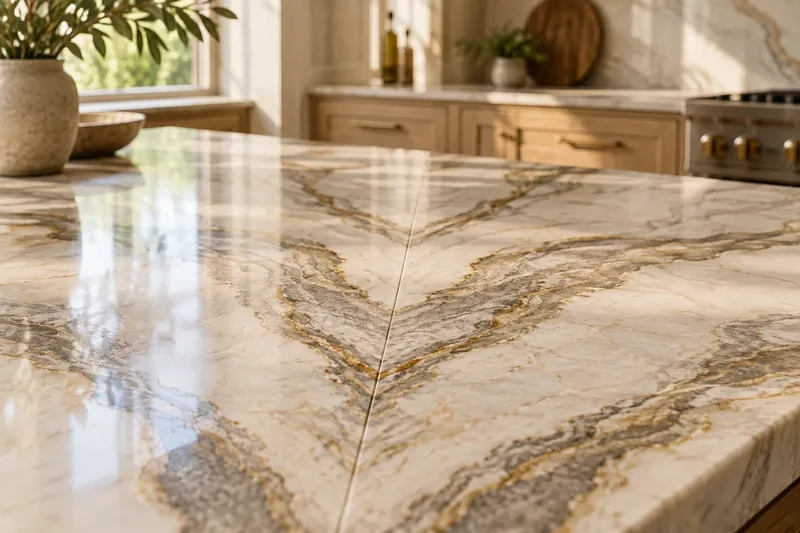
A bigger cooktop or a new downdraft can often go into your existing stone, provided the top is whole and the new hole will not eat into too much surrounding stone. We look at the span, the seams and the support underneath before promising anything.
Occasionally the plan simply does not leave enough stone around the hole. Then moving the unit or replacing the top is the sound choice, and we explain which suits your kitchen. Forcing a cut into a marginal top ends with a crack and a larger bill.
Laminate and tile tops generally cannot take a clean stone-style cutout. A fresh stone top is the route to a proper result in those cases, and we can talk through the options.
Most cutouts cost nothing extra, because they are part of the top we make. For other cases, the numbers below are estimates only, and the written quote is what sets your final number once we have seen the counter and the appliance.
The final figure moves with stone thickness, how hard the material is, and how much support the layout needs. A tight spot near a sink or a seam adds care and time.
The quickest route to a real price is a free measure with the appliance model in hand.
The rim of a cooktop opening takes heat and spills, so keep an eye on the edge. Wipe splashes promptly, and avoid setting a pan straight off a burner onto the stone beside it.
Natural stone near the cooktop benefits from a sealer, and a quick check of the gap around the unit now and then shows if the sealant needs refreshing.
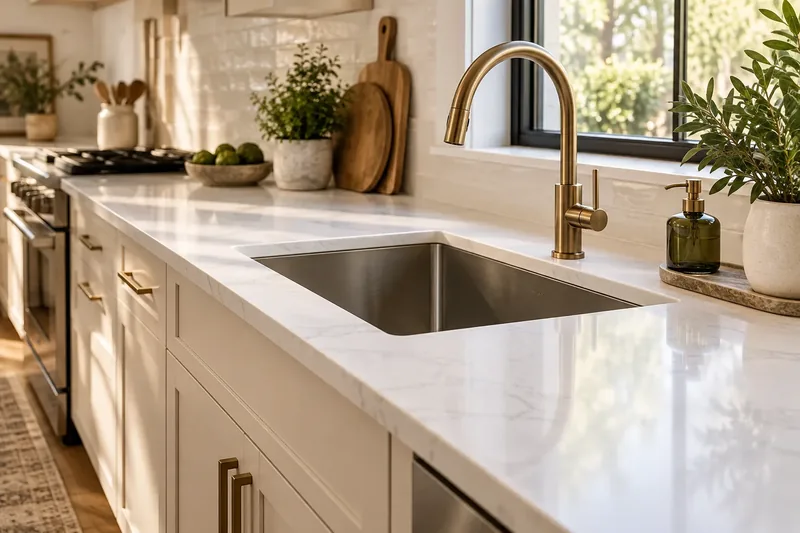
The process
Have the model number ready and the opening is made to match.
Tell us which cooktop or appliances are going in, and the stone you have chosen.
We take the maker's drawings, measure the layout and flag any narrow stone.
We saw the openings in our shop and grind the inside corners to a radius.
We set the top, drop in the appliance and confirm it seats evenly.
Questions
Ideally the unit, or else its exact model number. Each maker publishes a cutout drawing, and a guess risks a gap or an opening too tight to seat. If the unit is backordered, we use the published sheet and tell you so.
Sometimes, if the stone is intact and the new hole leaves a healthy margin. We inspect the span, seams and support first, and we say so plainly if the layout will not work.
Square corners gather stress and are where cracks begin. A radius spreads the load, so we round every inside corner on every opening.
Yes. The stone is routed from below to form a rebate for the rim, and that is bench work. A finished top already on your cabinets is the wrong place to attempt it.
We cut the slot behind the burners from the vent maker's drawing, then measure the bridge of stone between the two openings and reinforce it if it looks slim.
Any hole removes stone, but a well-planned one does not cause trouble. Rounded corners, enough material at the edges and a support rail under narrow strips keep the top strong.
Yes, and it happens while we make the top. Bring the fixture list along, since each one sets a hole diameter and spacing.
Book a free measure and keep the appliance model handy. We study the layout together, and a written quote follows.
Homeowners can book a free measure, while businesses and builders can send drawings for a written bid.
Licensed, bonded & insured · License #585047. Calls only, we do not receive text messages.