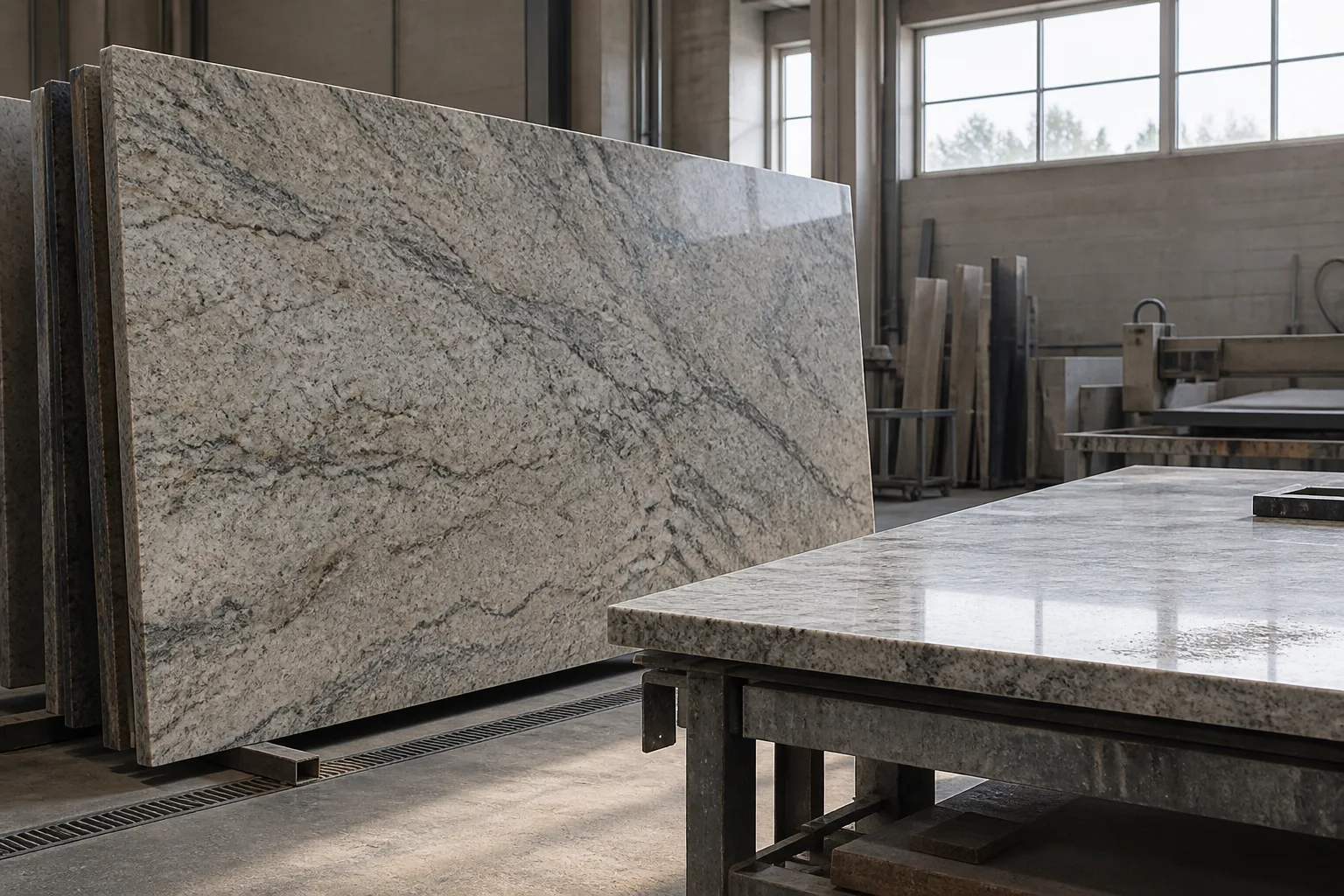
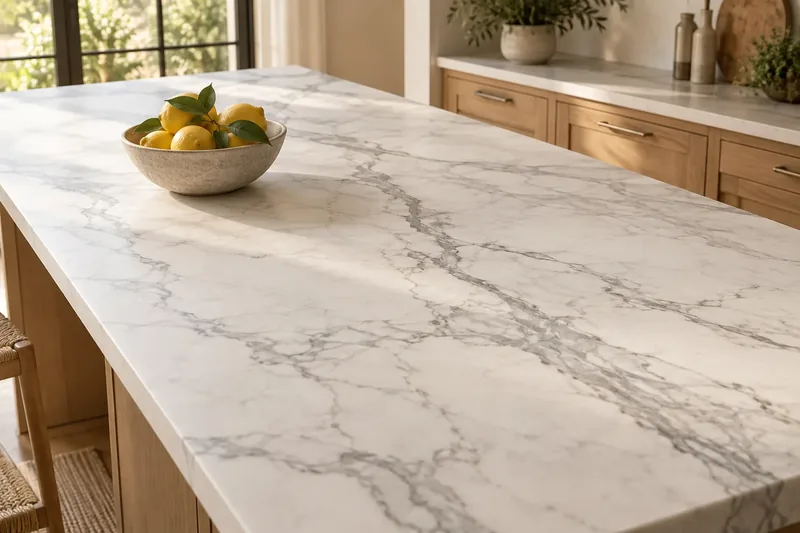
Etch marks on marble
Dull rings left by lemon juice, wine or vinegar are honed level and the polish is blended back across the area.

Temecula Custom Countertops provides countertop refinishing & resurfacing in Temecula, CA and across Riverside County. If your stone is sound but dull, etched or stained, we hone, re-polish and reseal it, and we tell you straight when a tired top is better replaced.
Get a free measure or a bid
Refinishing gives a worn countertop its surface back without removing it from the cabinets. The stone stays where it is, and we restore what has been lost on top: the shine, the even colour, the stain resistance. For many kitchens that is a one-day visit instead of a remodel, and the cabinets, sink and plumbing are never disturbed.
We look at every top before we promise anything. Sound granite, quartzite and marble usually respond well. A top that is cracked through, sagging or built over failing cabinets does not, and we say so at the first visit. We work in Temecula, Fallbrook and French Valley homes.
How we work
Homeowners get a free surface check. Wineries, restaurants, offices and builders get a bid from their drawings.
Refinishing means working on the surface of the stone you already own. Resurfacing means putting a new surface over an old base. Replacement means a new top altogether. People often use the words as if they were the same job, and they are not, so it helps to separate them before you spend anything.
Refinishing is the lightest option and the right first move for natural stone. A diamond-abrasive process removes a thin layer of damage, such as etch rings on marble or a haze of fine scratches, and brings the face back to an even finish. The stone is then resealed. Nothing is torn out.
Resurfacing is for tops that are tired for a different reason, such as a dated laminate or an old cultured surface. Some bases can be overlaid, but many cannot, and an overlay on a weak base only hides a problem for a while. We assess it honestly, and for most laminate we will steer you toward new stone.
A free look at the top is how we sort it out. It takes a few minutes and costs you nothing, and it keeps you from paying for a fix that was never going to hold.
Most of what looks like permanent wear on stone is damage to the top few thousandths of an inch. That is the layer a refinish works on. Deep cracks, chipped corners and burn marks that go into the body of the stone belong to repair work, and we separate the two when we look at your counter.
Dull rings left by lemon juice, wine or vinegar are honed level and the polish is blended back across the area.
Light scratches from pots, trays and daily wiping are buffed out in stages with finer and finer pads.
A hazy top is deep-cleaned, re-polished and sealed, which returns the depth the slab had when it was new.
Stone that drinks water and darkens is cleaned, dried and resealed so spills sit on top again.
Yes, in most cases it can. Granite loses its gloss when the polish wears down or when a film of soap and mineral deposits builds up on the face. Hard water makes this worse. Local imported supply is reported at roughly 230 mg/L hardness, so the area around a Temecula faucet often turns cloudy long before the rest of the top does.
We begin by cleaning the surface fully, because polishing over film simply grinds it in. Then we work through a sequence of diamond pads from coarser to finer, keeping the surface wet and moving steadily so no spot heats up. The last pads bring up the shine. A fresh impregnating sealer goes on afterwards.
Polish only improves what is there, so it cannot fix a pit, a chip or a crack. Those are repair jobs, and we will point them out so there are no surprises.
If you are tired of the high gloss itself, the same equipment can go the other way. We can hone granite to a soft satin face that hides water spots and fingerprints.
The finish you choose changes how the stone looks, feels and wears, and a refinish is the cheapest time to change it. A polished face is glossy and throws light around the room. A honed face is matte or satin and reads softer and more natural. Both are the same stone, so you are choosing a surface, not a material.
Temecula kitchens that open onto a patio get strong daylight, and strong light makes a mirror polish glare in the afternoon. Many homeowners find a honed or lightly textured face calmer in that setting. We can put a small test patch on a hidden spot, such as the underside of a cutout piece or a corner behind an appliance, so you see the finish on your own stone before we do the whole top.
Changing from honed back to polished is possible too, though a honed stone must be sealed with extra care.
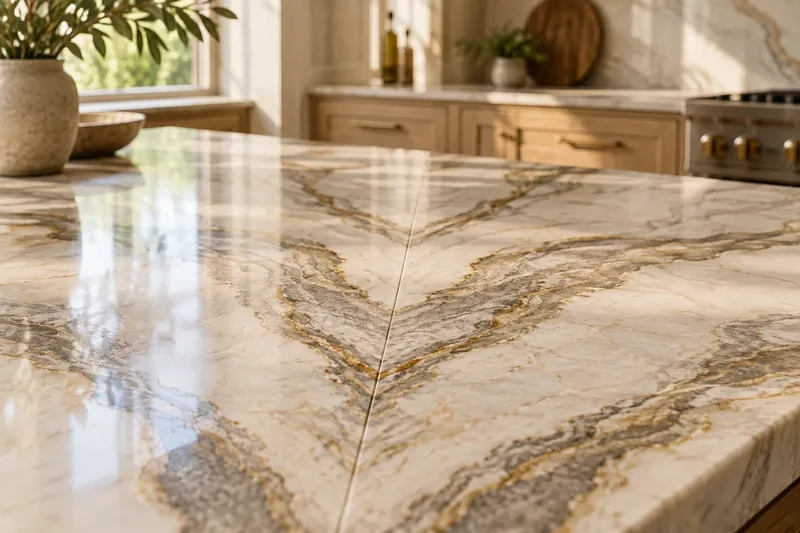
A refinishing visit is planned so your kitchen is usable the same day. We start by protecting the cabinets, floors and appliances with sheeting and tape, then clear the counter and wash the stone to see its true condition. Any chips or cracks are marked so they can be dealt with before polishing.
The grinding and polishing are done with wet diamond pads, which keep the stone cool and trap the slurry so it can be vacuumed up. We take each stage across the whole area, not just the damaged patch, because a polished spot beside a dull one looks worse than the original wear.
Stone should stay clear of water and oil for a short while after sealing, so we tell you how long to wait before you cook on it. For a normal kitchen the work takes a day, and a very large island or heavy etching can add time. We give you the schedule before the crew arrives.
Refinishing costs far less than a new top, and the numbers below are estimates, not quotes. Your written quote sets the final price after we have seen the stone, because the amount of damage drives most of the difference.
Several things move a figure within these ranges: how much surface there is, how deep the damage runs, how many seams and edges need attention, and how hard it is to reach the room. Heavily etched marble costs more than lightly dulled granite, and an island with a waterfall side adds edge work.
Compare that to replacement. A new installed top commonly runs many times these amounts, so refinishing is worth doing whenever the stone is truly sound. When it is not, we say that plainly and we would rather you save the money.
A refinished top stays good for years with a few simple habits. Wipe acids such as lemon, vinegar and wine soon after a spill, especially on marble and honed stone. Use a pH-neutral stone cleaner and a soft cloth, and dry the faucet area to stop mineral film from returning.
Once a year, sprinkle a few drops of water on the stone. Drops that sink in and darken it mean the sealer has worn out, and we can renew it in a short visit. Quartz never needs sealing, since it is non-porous, and rarely needs refinishing at all.
The process
You see the stone checked and know the plan before any pad touches it.
Tell us what the top is made of and what bothers you: dullness, etching, stains or a dated look.
We inspect the stone, test a hidden spot and tell you whether refinishing, resurfacing or replacing makes sense.
We hone, polish and clean the surface wet, working across the whole run for an even finish.
We seal natural stone, check the result in raking light and show you how to care for it.
Questions
Yes, when the stone is sound and you still like the material. It costs far less and leaves your cabinets alone. We recommend replacement only for cracked or failing tops, or when you want a different stone.
Most kitchen granite wants fresh sealer every one to three years, and dense stones can go longer. Let a few drops sit on the surface: if they darken the stone, resealing is due.
Yes. Honing turns a glossy surface into a soft satin one, and a honed surface can be polished back to gloss. We can test a small hidden patch first so you see the result.
Usually it will. Etching is damage to the polish, so honing the area level and blending the polish back removes it. A deep stain that has soaked into the stone is a different problem and may need a poultice.
Rarely. Quartz is non-porous, so it needs no sealer, and its surface is hard. We can often buff out a light surface mark, but heat damage and deep chips need repair instead.
Plan on a short visit for resealing and roughly one day for a full hone and polish of an ordinary kitchen. Big islands and heavy etching add time, and you get the schedule before we arrive.
Sometimes, if the base is solid, but most laminate is better replaced with real stone for a lasting result. We look at it and tell you honestly rather than sell you an overlay that will fail.
Book a free surface check. We look at the stone, talk through the finish you want, and a written quote follows.
A free surface check for homeowners, and a written bid from drawings for businesses and builders.
Licensed, bonded & insured · License #585047. Calls only, we do not receive text messages.