Full height, counter to cabinet
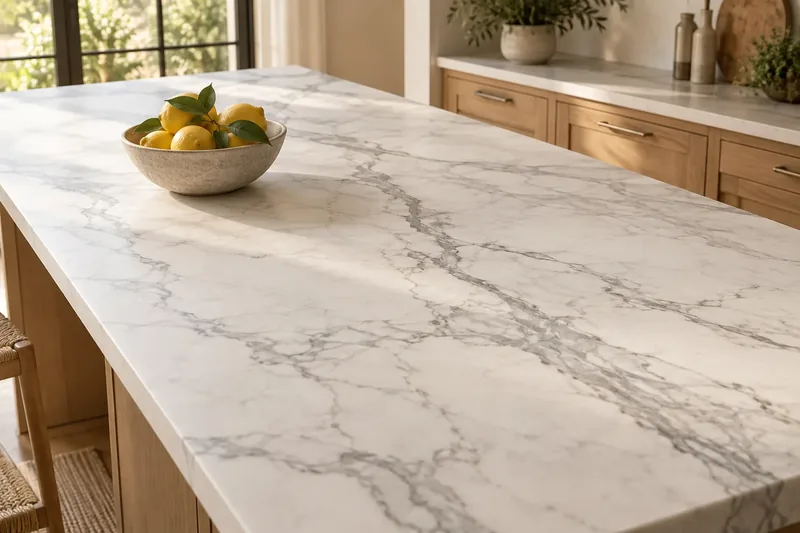
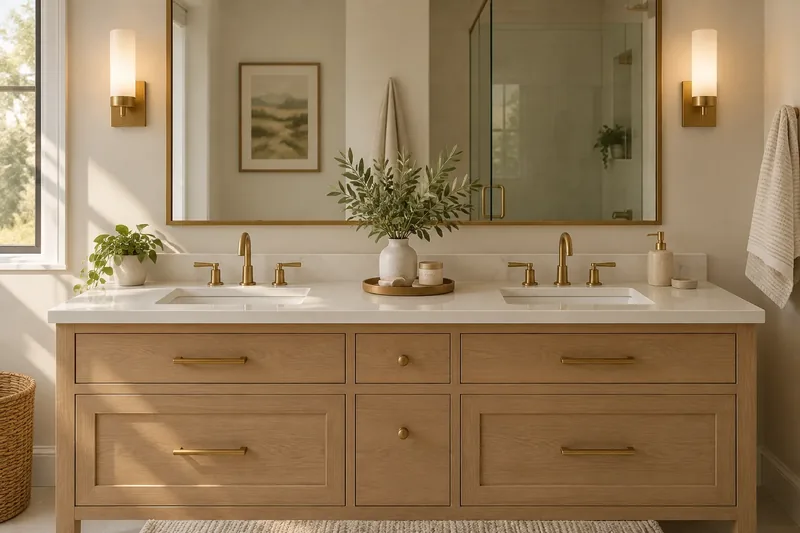
The stone rises from the work surface to the bottom of the upper cabinets, so the whole run reads as one surface.

Temecula Custom Countertops provides full-height slab backsplash installation in Temecula, CA, Fallbrook and French Valley. The same stone as your counter climbs the wall behind the range or sink, so there are no grout joints to scrub and no caulk line to fail. We template the real wall and cut every opening in our shop.
Get a free measure or a bid
A slab backsplash is a single sheet of stone that replaces tile on the wall above your counter. We cut it from the slab you chose for the top, so the pattern can run straight up from the work surface. It is a clean, quiet look that makes a kitchen seem larger.
Most of our slab splash work is behind a range, around a window or along a whole kitchen wall. We handle the measuring, the cutting and the setting ourselves, which matters here because a wall that is slightly crooked shows up the moment a stone panel goes against it.
How we work
Free measure at your home, or a written bid from drawings for trade clients.
Stone behind a cooking surface is easier to live with than tile because it has no grout. Grout is porous, it holds grease and steam, and it darkens in the exact places you look at most. A slab wipes clean with the same cloth you use on the counter.
There is a visual reason too. Tile cuts a wall into a grid of small rectangles, and the eye reads every line. A slab shows the stone as it formed, with veins and movement uninterrupted from the work surface up to the cabinets. In a small kitchen that continuity makes the room feel taller and calmer.
Stone does cost more in material than most tile, and we say so up front. In exchange you get a wall that looks the same on day one thousand as it does on install day.
You do not have to cover every inch of wall to get the benefit. We lay the options out against your cabinets at the measure, so you can see the stone where it would go rather than guess from a drawing.
The stone rises from the work surface to the bottom of the upper cabinets, so the whole run reads as one surface.
Stone rises behind the range up to the hood or the ceiling and is framed by paint or tile on either side. It puts the material where eyes land.
A few inches of stone sits behind the counter, which removes the caulk joint at the corner at a lower price.
Stone covers two or three walls, including window sides. This looks the most finished and uses the most slab.
This is a precision job, because stone cannot flex to hide a wall that is out of true. Each outlet, switch, pot filler and hood bracket needs an opening in exactly the right place, and a quarter inch in the wrong direction is visible.
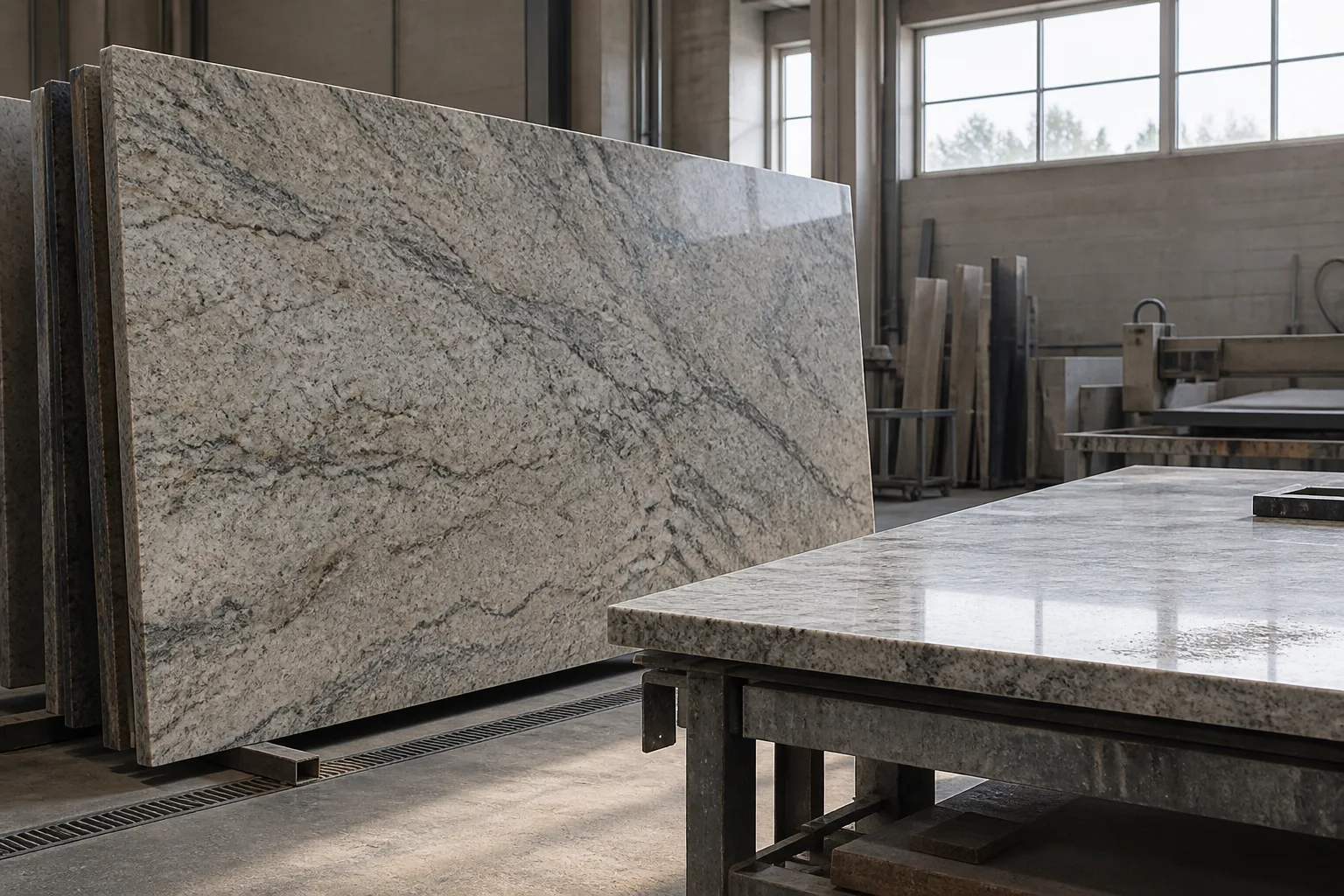
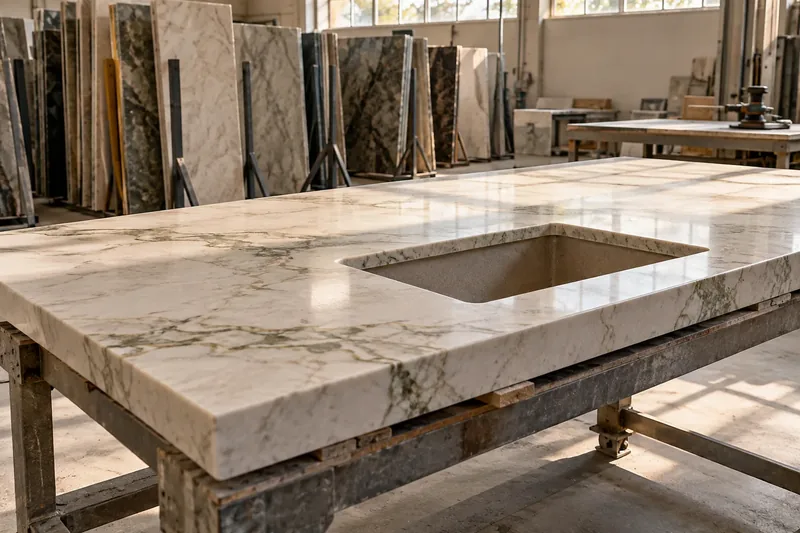
We template the wall itself, using a rigid pattern marked at every opening. Back at the shop, the openings are cut with a bridge saw and a router, then checked against the template before the stone is released. Cutting in the shop keeps the edges clean and keeps stone dust out of your kitchen.
Electrical boxes matter more than people expect. When stone replaces drywall and tile, the face of the box sits at a different depth, so an outlet may need to be moved forward. Your electrician can do that before our install date, and we tell you which boxes to check.
If a wall bows or leans, we tell you at the measure. Small variations are absorbed in the setting adhesive. Larger ones need the wall flattened first, and it is far better to learn that now than when a finished panel will not sit flat.
Quartz, quartzite, granite and porcelain all make good splashes, and marble does with a few caveats. The best pick is usually the stone you already chose for the counter, because the match is the point of the exercise.
Engineered quartz is the easiest behind a cooktop. It shrugs off grease and heat from the wall side, and the pattern is consistent from one panel to the next. Quartzite and granite give you natural movement, and both take heat well, though they need a sealer. Porcelain slabs are thin and light, which helps on a tall wall, and they resist stains without sealing.
Marble is beautiful on a wall, and it will etch where acidic splatter lands. Some owners love the patina that results, and others hate the first dull spot. If you want zero upkeep behind a range, we steer you to a harder stone and keep the marble for a dry wall.
Wherever the stone goes, the sunlight in a Temecula kitchen shows its character. A slab that looks flat in a showroom can glow in a room with a big south window, so we check samples against your light.
Setting a slab backsplash is quick compared with the work that goes into it. The panels are cut to the template, labelled and carried in after the counters are down. We dry-fit each piece against the wall, then bond it with an adhesive made for stone and press it flat.
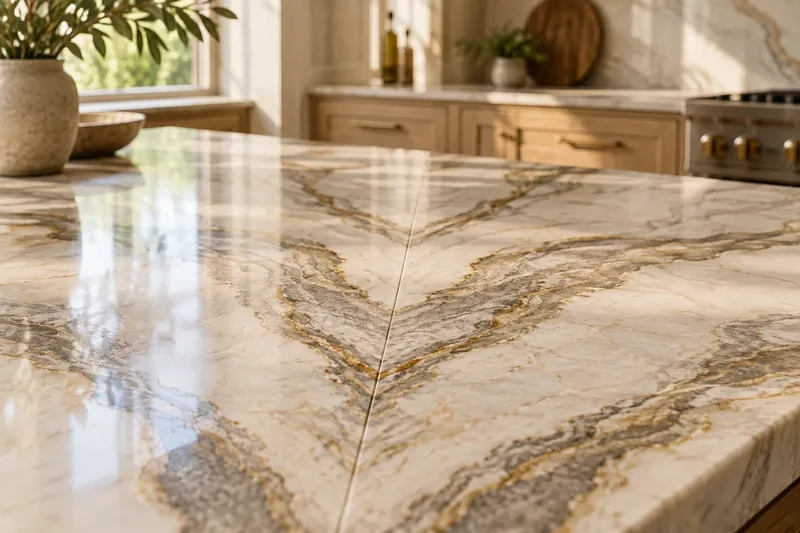
Where two panels meet, the joint is placed where the pattern allows it to hide. On a long wall we pick the seam location during the slab layout, so a vein crosses it cleanly. The joint is filled with a colour matched to the stone and polished smooth.
The top edge of the splash is finished in the shop. A square edge is crisp and modern, and a slightly eased one is gentler on the eye. Where the stone stops at the underside of a cabinet, we leave a small gap and fill it with a flexible caulk so a settling house does not crack the panel.
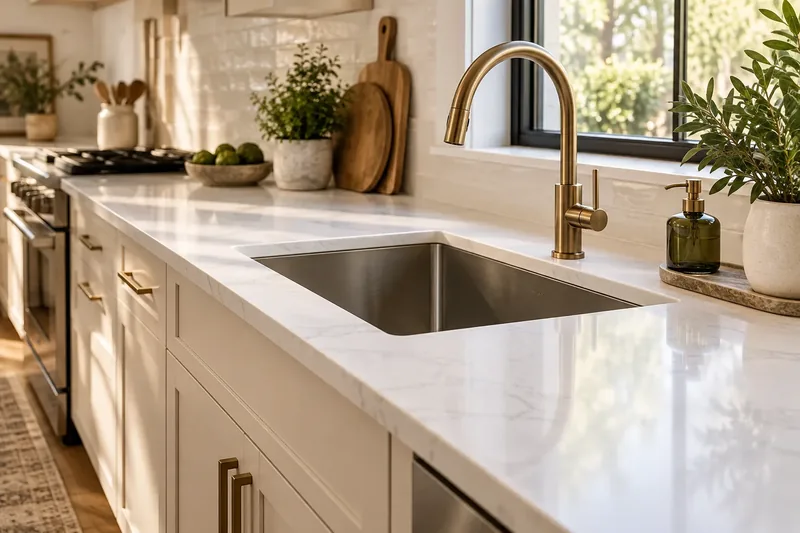
At the counter line, the stone sits tight to the top. We do not rely on a bead of caulk to do the work, which is where the leaks and the mildew start on a tile splash. Clean-up is the last step, and we leave the wall and the counter clear of residue.
Slab backsplashes are typically estimated at roughly $50 to $120 per square foot installed, depending on the stone and the complexity. A short stone return costs less, usually about $10 to $25 per linear foot, while a framed hood wall often lands in the $1,200 to $4,000 range.
These numbers are estimates and change with slab prices and what we find on your wall. Your written quote fixes the real number, and the free measure comes before it.
A stone wall behind the range needs a wipe-down and not much else. Use warm water and a mild stone-safe cleaner on a soft cloth, and dry the surface so no film is left.
Greasy splatter is the usual enemy. Wipe it while it is still warm and it comes off in a single pass. If it dries, a stone-safe degreaser lifts it without scratching.
Natural stone splashes want the same sealer routine as the counter. A water drop test once a year tells you when to reseal. Quartz and porcelain skip that step. Chips near a switch plate or a corner are worth a call, and we will say if a repair on the wall is possible.
The process
Nothing is cut until you have approved the layout on the slab and the openings on the template.
Tell us which wall you have in mind and which stone is on the counter. Builders and designers can send plans.
You choose the slab, and we draw the splash and the counter layout on it for your approval.
We template the real wall, mark every opening and cut and polish the panels in the shop.
The crew bonds each panel, fills the joints, finishes the edges and cleans up before leaving.
Questions
For many owners, yes. You lose every grout line and the caulk joint at the counter, and the wall wipes clean. Stone costs more than tile, so we show you the numbers first.
Yes, provided the splash and the top come out of one slab or at least one production lot. Settle the splash first, then we plan the veining across both before any cut.
Each box is marked on our wall template and the opening is cut at the shop. A box set too deep or too shallow for stone is something your electrician fixes first.
We find out at the measure. Small waves are handled in the setting bed, and larger ones need the wall flattened before we install.
Yes. Stone behind the range with tile or paint on either side puts the look where it counts and uses far less slab than a full run.
It can be, if you accept that acid splatter will etch it. A harder stone such as quartz or porcelain is safer if you want low upkeep.
Natural stone does, and quartz or porcelain does not. We seal natural stone after install and explain the yearly water drop test.
Book the free measure. We template the wall, count the openings and send a written quote that covers stone, fabrication and installation.
Homeowners get a free measure of the wall. Builders and designers can send drawings and get a bid.
Licensed, bonded & insured · License #585047. Calls only, we do not receive text messages.