Two slabs
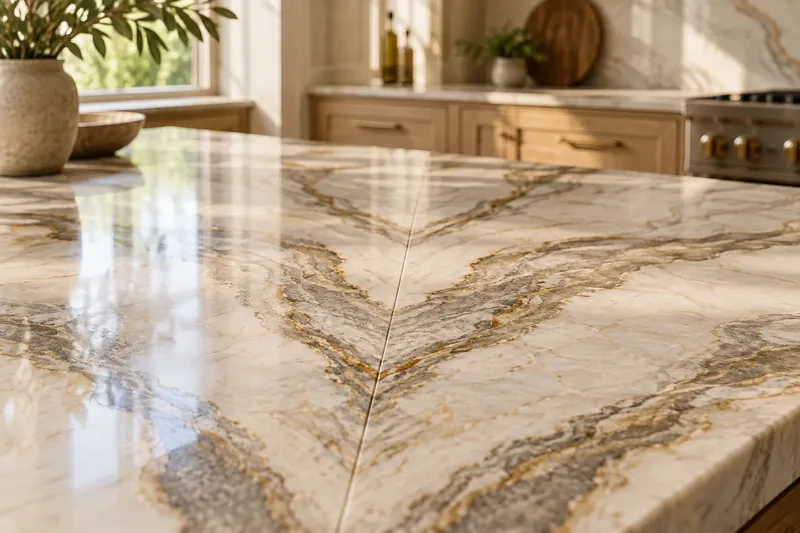
The classic pair for a countertop run or a single backsplash wall.

Temecula Custom Countertops is Riverside County's trusted specialist in bookmatched slab countertops in Temecula, CA, specializing in marble, quartzite and exotic granite. We offer bookmatched countertop runs and full-height slab backsplashes.
Get a free measure or a bid
Or call (951) 466-2371. Calls only, we do not receive text messages.
Our team provides sequential slab selection and match layout, delivering a mirrored pattern for homes and refined countertop installations for both residential and commercial projects. We lay out the match on your chosen slabs and we template the cabinets ourselves, and the same crew that drew the pattern sets the stone.
From polishing a mitered edge to closing a seam that follows the vein, our team handles every detail. Serving Temecula, Rainbow and Fallbrook, we make the match the first decision and the cut the last.
How we work
Homeowners get a free measure. Wineries, restaurants, offices and builders get a bid from their drawings.
Bookmatching means matching two adjoining surfaces so they mirror each other the way the two pages of an open book do. The two pieces come from the same source, cut one after the other, so the pattern on one is a close reflection of the pattern on the other. Furniture makers do it with wood veneer, and stone fabricators do it with marble, quartzite and other patterned slabs.
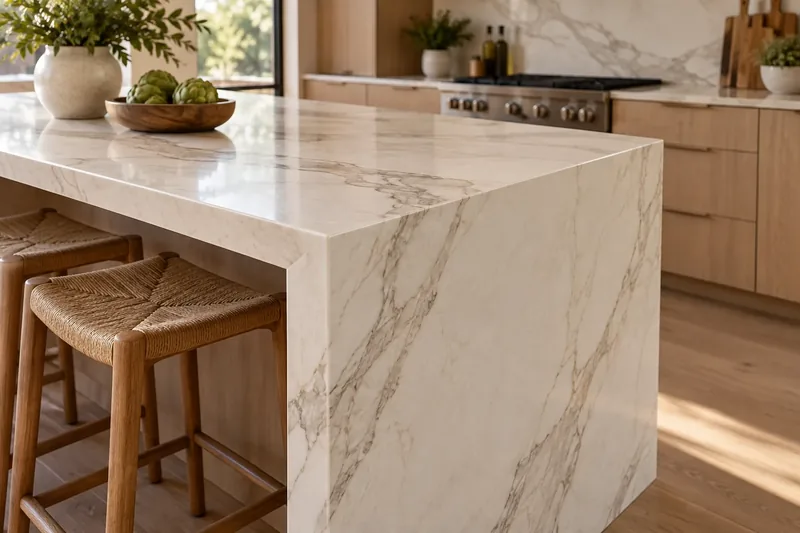
In a kitchen the effect is a pattern that appears to grow outward from a centre line. On a long countertop run it makes a symmetrical vein that draws the eye along the room. On a wall it makes a single image that is larger than any one slab. The result can look almost like one continuous piece, or it can be a bold, wavy design that becomes the focus of the house.
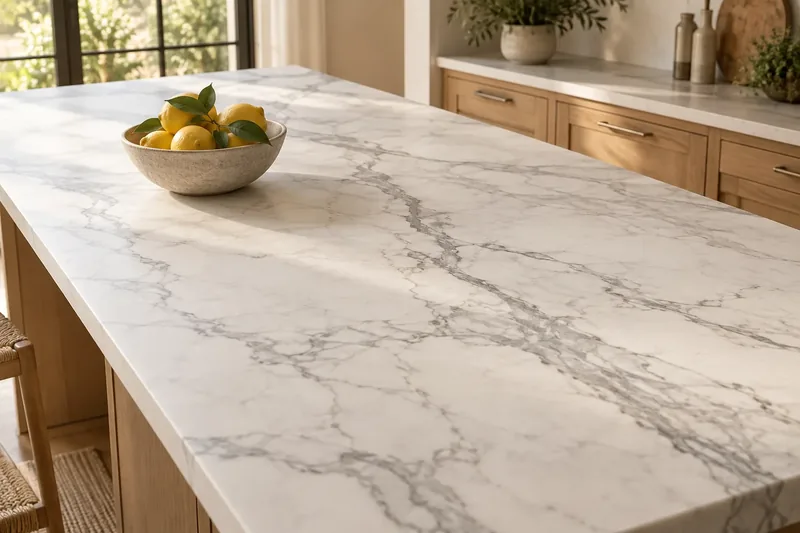
It is not the right choice for every stone. A plain, even-coloured granite has no pattern to mirror, so the work is wasted. The match pays off on stone with strong movement.
Designers like bookmatching because it turns a countertop from a surface into a picture. The effect is strongest when the room is built around it, with plain cabinets and quiet walls that let the stone speak.
A real match starts with sequential slabs, meaning two or more slabs taken in order from the same block. A slab and its neighbour two places down the stack are not the same pattern, so the slabs have to be bought, tagged and kept together as a set. This happens at the supplier's yard, not in a catalogue. We go through the bundle with you, look at the polished faces, and choose the pair or set whose pattern reads best when it is turned. We check that the slabs are consecutive and that the polish is on the matching faces, because the second slab has to be turned over to mirror the first. Natural stone varies from block to block and from lot to lot, so you cannot reorder the same match later. If a slab breaks in the shop, the replacement is not guaranteed to match. That is why we handle the slabs carefully and tell you at the start how many you need.
The classic pair for a countertop run or a single backsplash wall.
For a long island with waterfall ends, or a pattern carried across a wall. We keep the slabs flat and labelled at every step. A pair that is stacked wrongly, or turned the wrong way when it is moved, can lose the match before it ever reaches the shop.
The match is decided on the slabs themselves, before any cut. We lay out the pieces of your job on the sequential slabs, turn the second slab to mirror the first, and place the seam where the pattern hides it best. We photograph the layout so you can approve it.
Placing the seam is the craft. A seam that follows a strong vein line almost disappears, while a seam cut across the pattern shows. For a bookmatched pair the seam is the centre line of the mirror, so it is meant to be seen as part of the design, and it is made tight and level.
Only after the layout is approved do we cut. Every cut is made wet in the shop, the edges are polished, and the pieces are numbered in their order so the crew at your house sets them in the sequence they were drawn.
If something in the stone changes the picture, for example a fissure or a patch of resin fill that sits where the seam would go, we move the layout rather than hide the problem.
We also check each slab for hairline cracks and repaired fissures under good light, because a hidden flaw near the seam can end the match and send the job back to the yard.
A bookmatched backsplash carries the match up the wall behind the range or the sink. A full-height slab backsplash runs from the countertop to the underside of the cabinet or to the ceiling, with no grout lines to break the pattern.
That is where the added material and labour come from. A full-height piece uses a large part of a slab, needs outlet and window cutouts planned to the millimetre, and must be supported and fixed to the wall so it stays flat. The wall behind it also has to be flat and strong enough to carry it.
The same approach works for a fireplace wall, a wet bar back wall or a feature panel at the end of an island. We measure the wall, mark the outlets and then draw the match so the pattern lands where you want it, usually with the strongest vein behind the range.
Outlets, switch plates and window returns all interrupt the pattern on a wall, so we mark them on the drawing early and ask the electrician to hold the boxes square and flush.
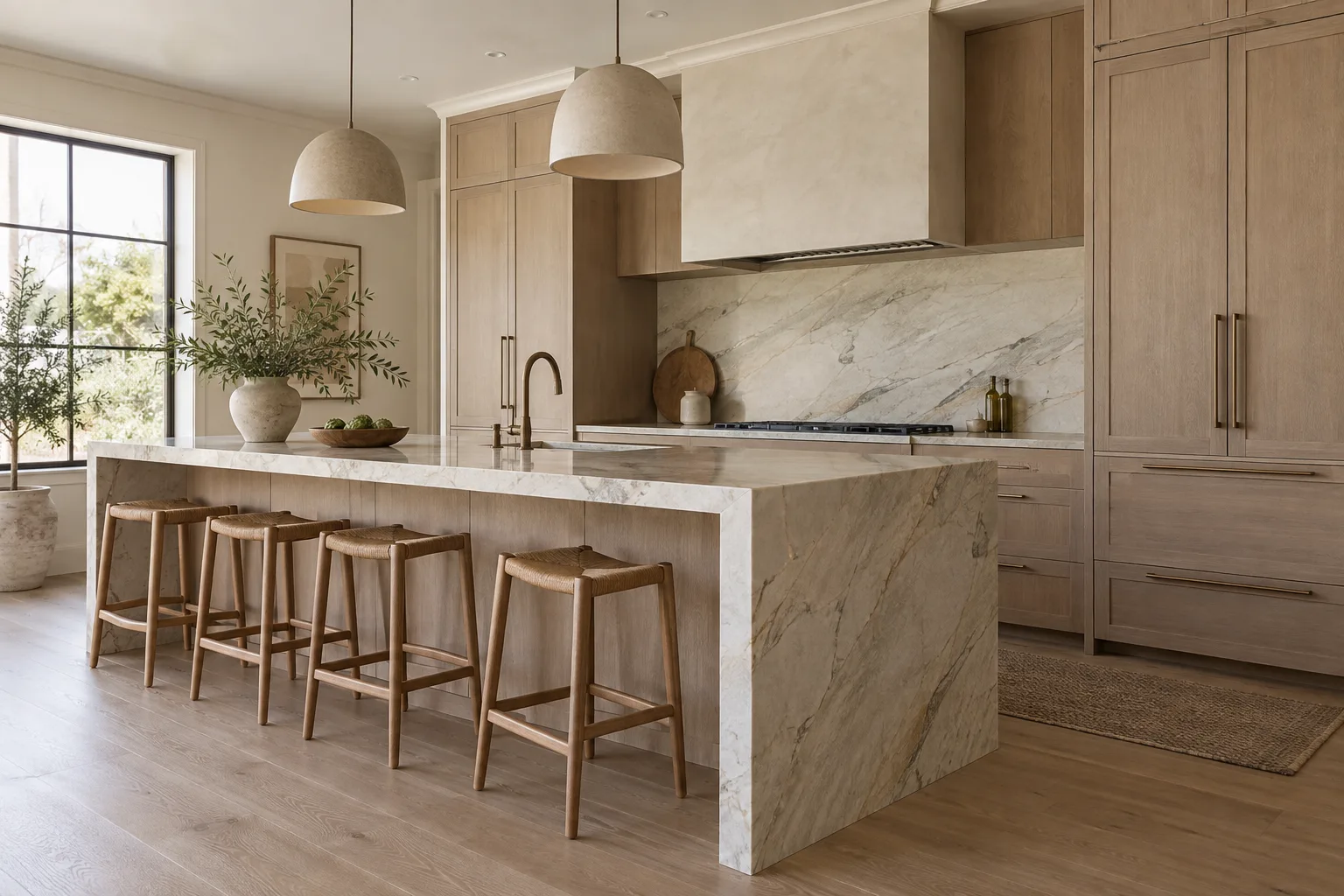
Bookmatching suits materials with movement, and most of the common ones can do it.
The classic choice for a dramatic vein. It etches, and the hard water in the valley leaves a mineral film, so it suits owners who accept a living surface.
Natural stone that often looks like marble but is harder, a popular choice for a bookmatched island.
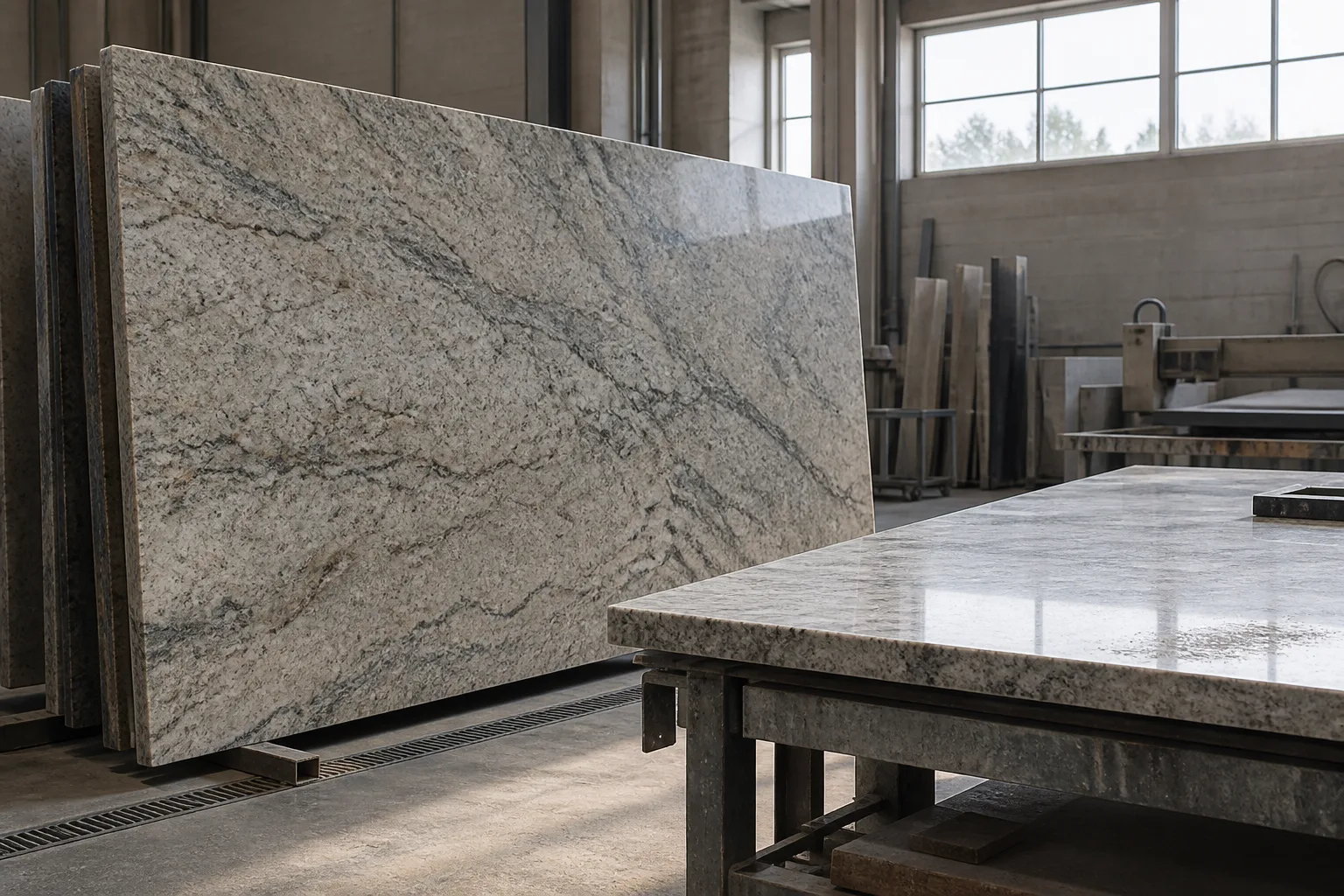
Granite is hard and heat tolerant, and some varieties have wild, flowing patterns that match beautifully.
Engineered stone made with a vein pattern can be matched when the manufacturer supplies sequential slabs, though the pattern is printed through the body and the match is less random. Whatever the stone, ask for a sealed sample and a photo of the slab in daylight. The look of a polished stone under yard lighting and under your own kitchen windows can be very different.
As a guide from industry ranges, a bookmatched slab countertop job is typically estimated at roughly $10,000 to $25,000. The spread comes from the number of slabs, the stone and its grade, the extra slab bought so the match can be chosen, thickness, edge profile, seams, cutouts, any full-height backsplash, overhang support, tear-out and disposal, plumbing disconnect and reconnect, and access to the house.
A bookmatched job costs more than a standard top because it uses more stone and more layout time. You pay for the slabs that make the match, not only for the pieces that end up on the cabinets.
These figures are estimates and subject to change with the stone, the scope and the site. The written quote sets the final price. The free measure is where it starts.
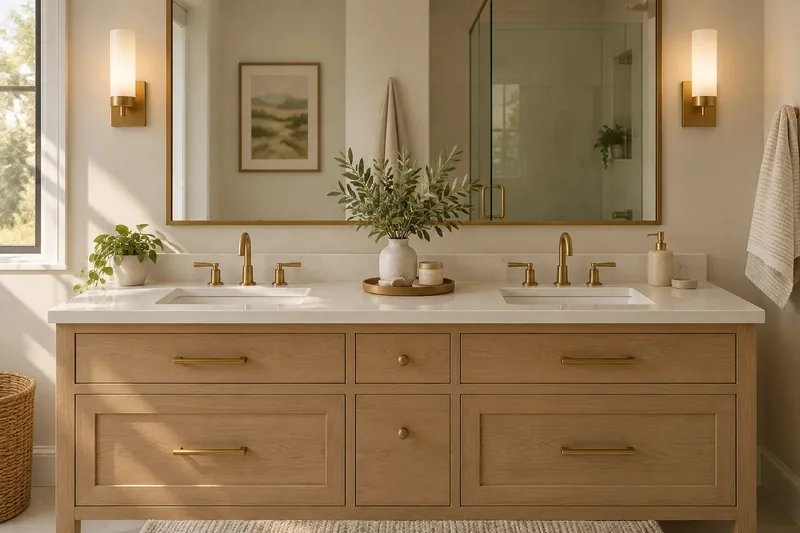
The extra slab bought to make the match is not wasted. Offcuts can become a matching shelf, a windowsill or a small vanity top, so ask us about using what is left over.
The order is simple. We visit for the free measure and template the cabinets, we go to the supplier's yard with you to choose the sequential slabs, we lay out and photograph the match, and you approve it. We then cut in the shop, polish, and set the pieces in order. Your install date is agreed at the measure and appears on the written quote.
On install day the numbered pieces go in the order they were drawn. The seam is closed and checked from several angles, the backsplash slab is fixed to the wall, and the sink and cooktop are fitted. Call to talk through your slab choice before you fall for a stone.
Bring photos of the match you like. A reference picture tells us more about the pattern you want than a stone name does.
The process
No stone is cut until you have seen the slab and signed off on where the seams go.
Tell us the room and the material you have in mind. Businesses and builders send drawings for a bid.
You choose the slab at the supplier, and we mark where each seam and cut will fall for your approval.
We measure on your installed cabinets, then cut, edge and polish the tops in the shop.
The same crew sets the tops, mounts the sink, closes the seams and cleans up before leaving.
Service area
Questions
Two slabs cut one after the other from the same block, opened like a book so the veining mirrors across the seam.
Often, yes. A match uses more material than a standard layout, and the slab count is confirmed at the layout stage.
Stone with strong movement, such as marble and quartzite, gives the best result. A plain granite gives you nothing to mirror.
At the centre line of the match or along a vein, wherever the pattern hides it best. We show you the layout before we cut.
Yes. A full-height slab backsplash carries the pattern up the wall, though it adds material and labour.
We tell you the risk at the start. A replacement from a different part of the block may not match, so we handle bookmatched slabs with extra care.
Yes. We lay out the match on the slabs and approve it with you before any cut.
It is softer than granite and it etches, so it suits a household that accepts a patina. Quartzite is a harder alternative with a similar look.
Call for the free measure. We template the cabinets, then go to the supplier's yard with you to pick the slabs.
A free measure for homeowners, and a written bid from drawings for businesses and builders.
Licensed, bonded & insured · License #585047. Calls only, we do not receive text messages.