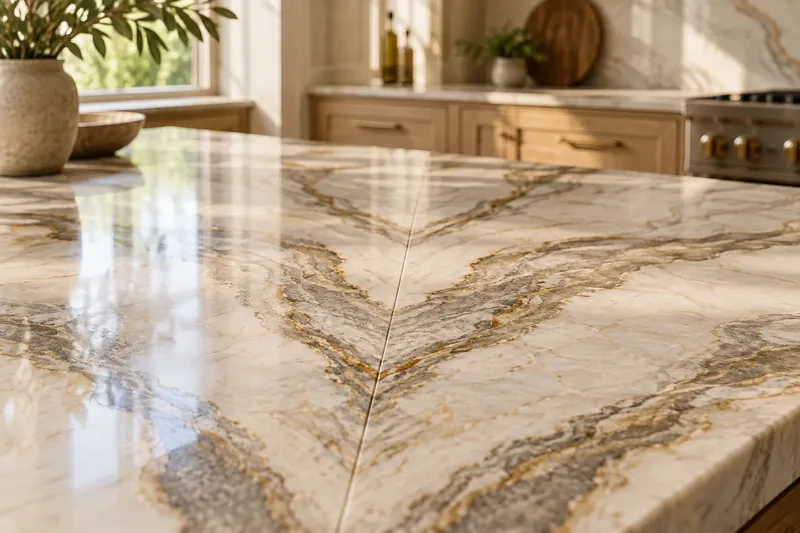
Choosing the New Top
Replacing a top is the moment to fix whatever annoyed you about the old one. Granite, quartz and porcelain slab each solve a different complaint.
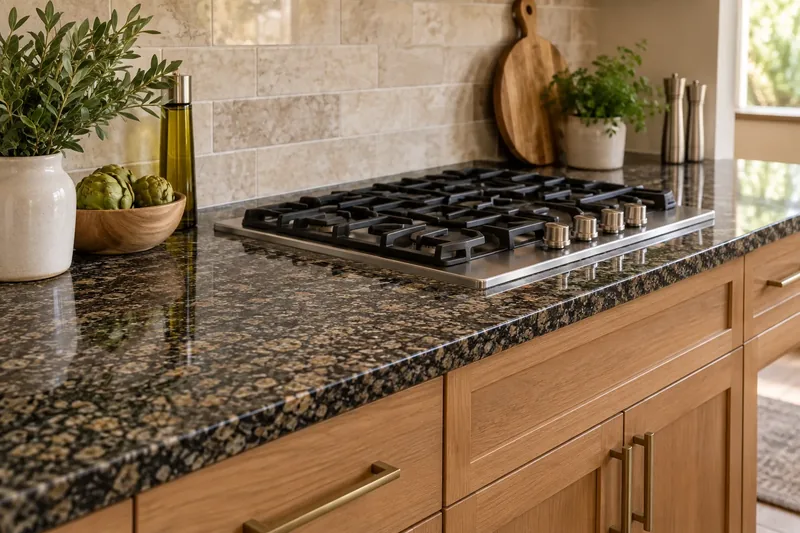
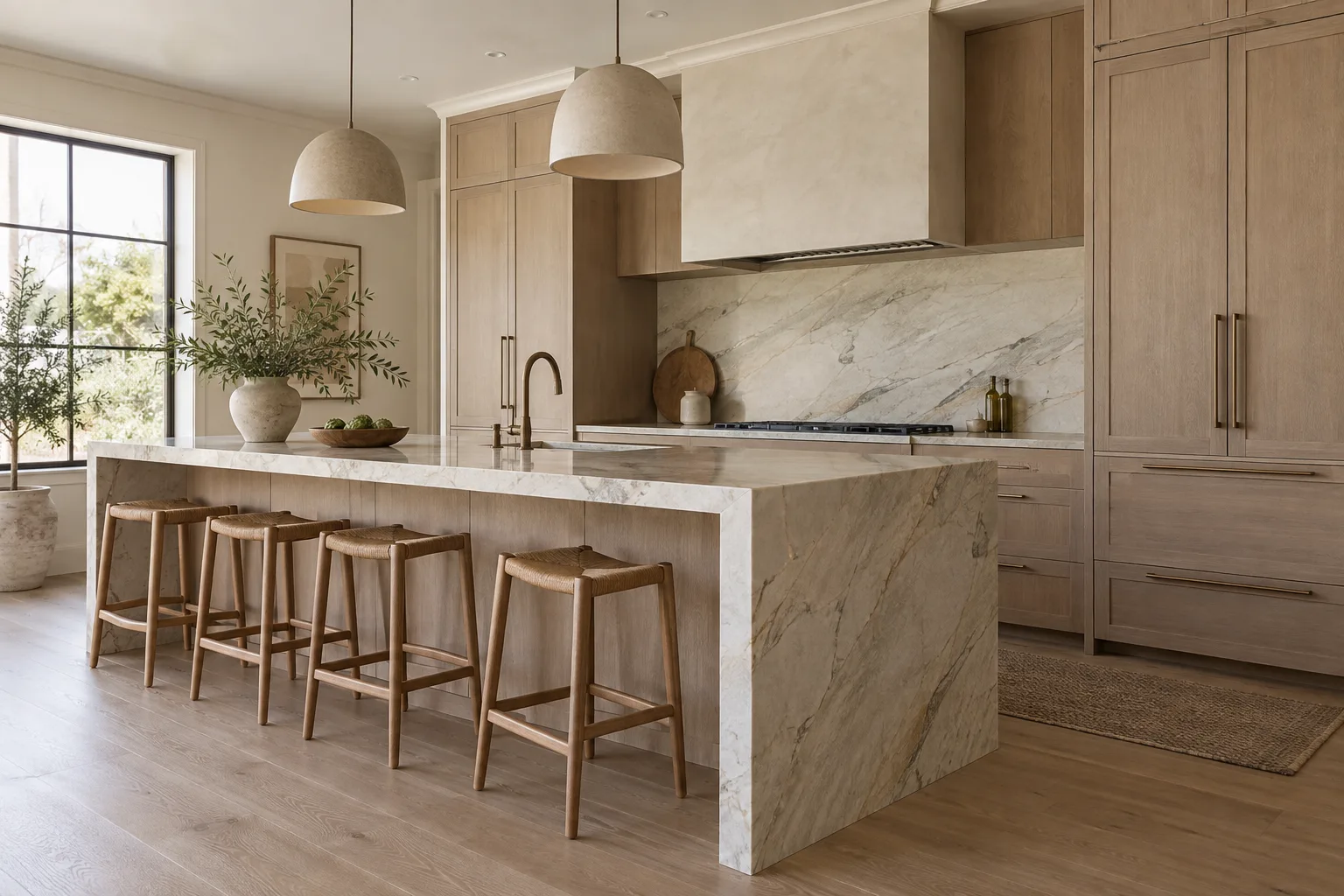
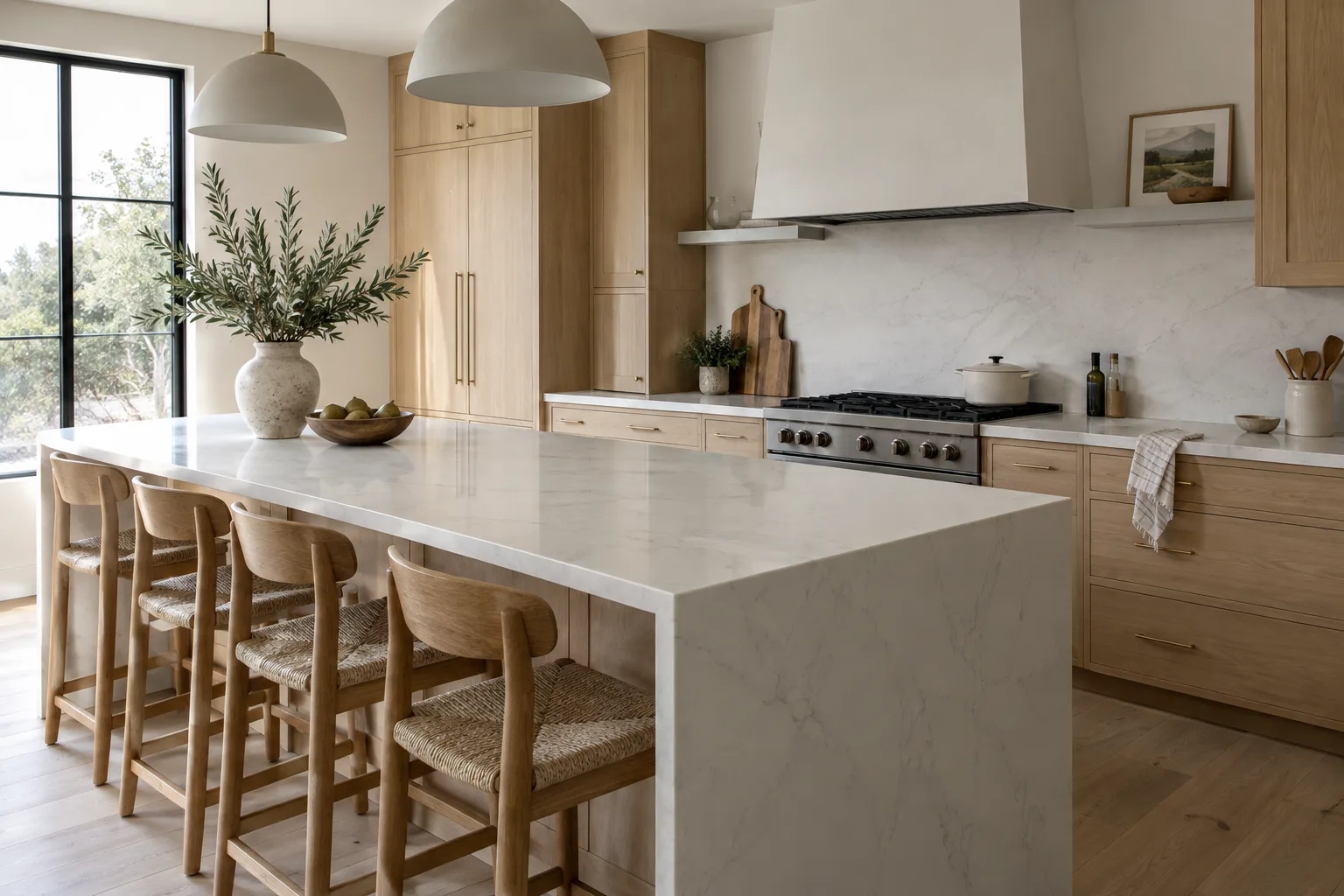
Granite is a natural stone that takes a fine polish, tolerates heat and has long been a popular countertop choice in the United States. It needs sealing at intervals, and a quick water drop test on the surface shows when the sealer has worn. Quartz is engineered stone made of ground quartz and resin, so it is non-porous and needs no sealing, but its resin does not like a hot pan set down straight from the burner. Porcelain slab is thin, hard and stain resistant, which suits a modern kitchen with a clean edge.
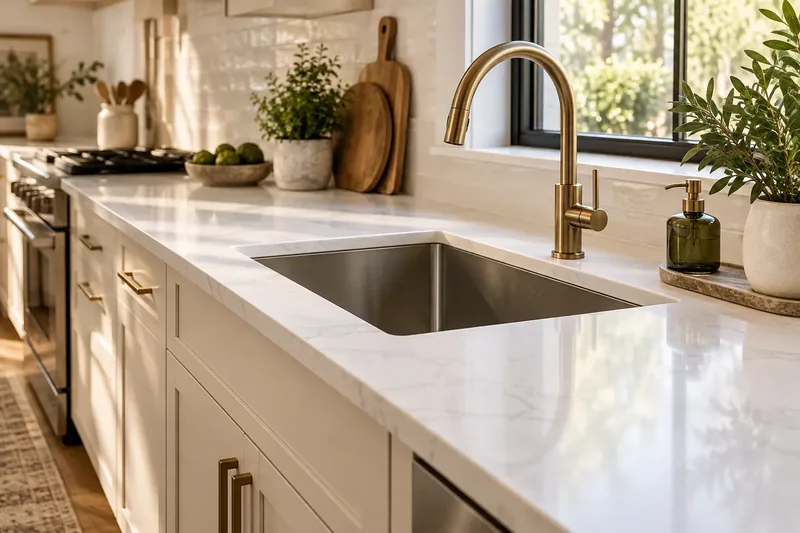
Water matters here. The Rancho California Water District reports average hardness near 230 mg/L in its imported water, and mineral film builds up around a sink and faucet. That is a point in favour of quartz around the sink, or a well-sealed granite that you wipe dry, over an etch-prone stone such as marble.
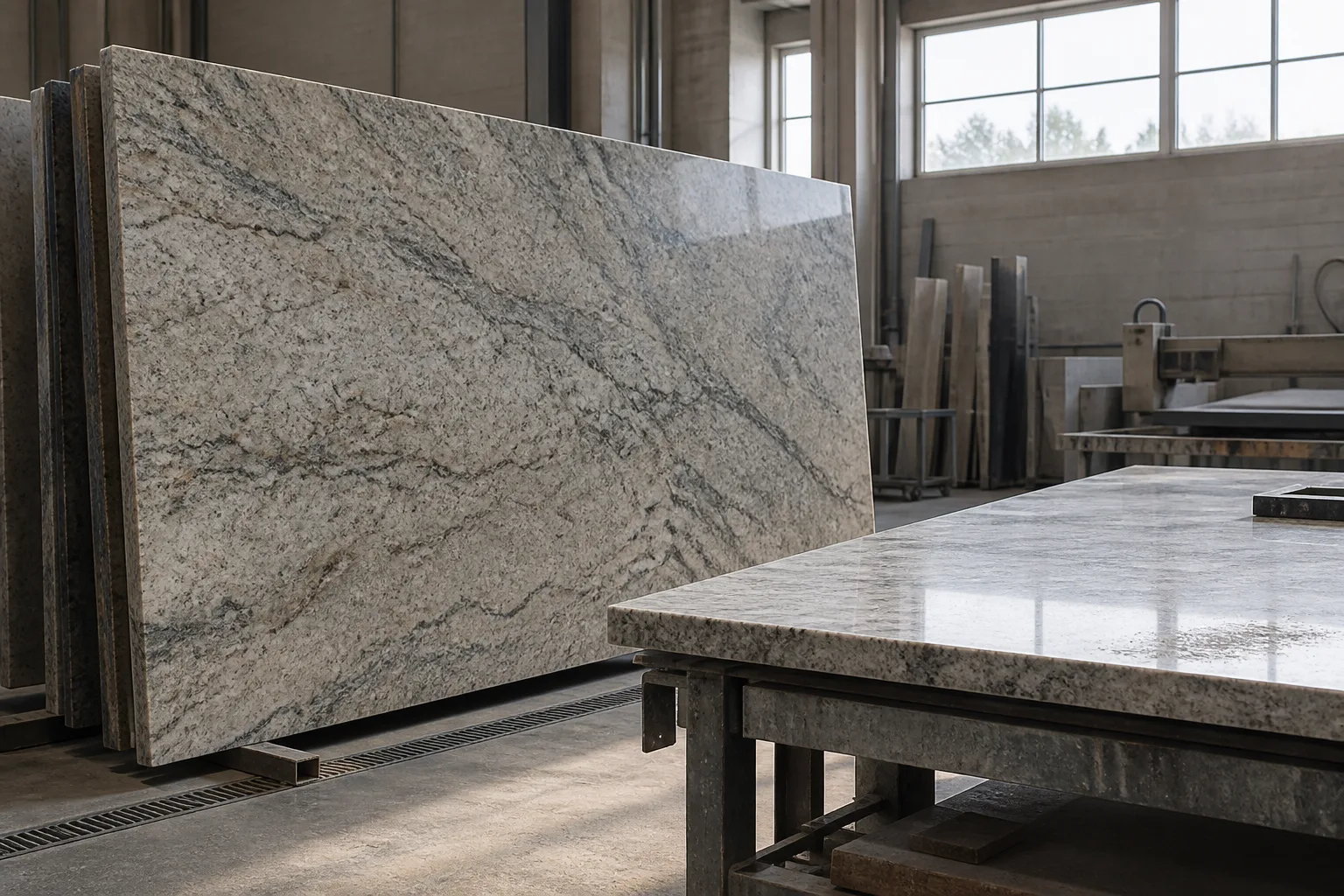
The slab itself is chosen at the supplier's yard, where you see the whole piece rather than a sample square.
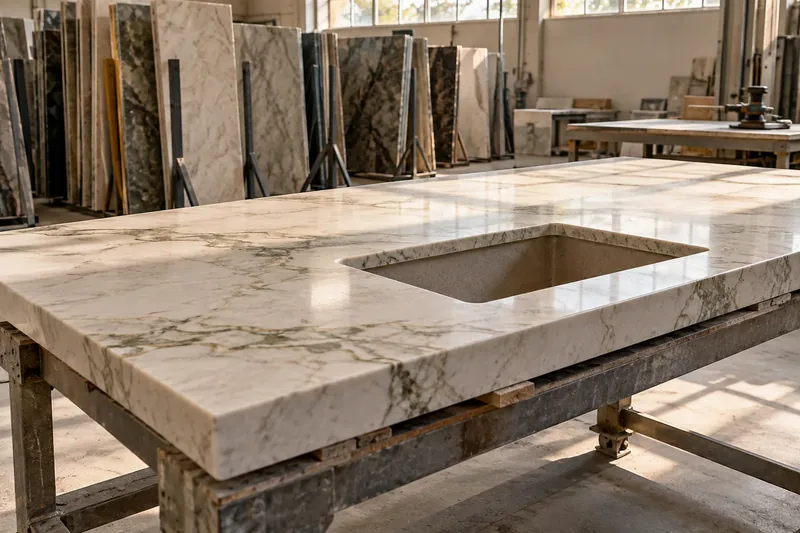
If the top coming out is first-generation granite from a 2000s kitchen, the stone itself is rarely the complaint. The usual complaints are a dull finish, a seam sitting where the old template put it, or a rimmed sink that traps dirt. A fresh slab with a better seam layout and an undermount sink answers all three at once.