
Marble Etch and Stain Removal in Temecula
Temecula Custom Countertops is a leading specialist in marble etch removal in Temecula, CA and across Riverside County, specializing in marble, granite and quartzite countertop restoration. We offer etch polishing and stain removal.
- Free in-home measure
- You approve the seams on the slab
- Price in writing first
Get a free measure or a bid
Or call (951) 466-2371. Calls only, we do not receive text messages.
About our stain, etch & scratch removal
Our team provides a clear diagnosis of every mark on your countertop, delivering a surface that looks like the stone again for both residential and commercial projects. We fabricate and template natural stone in our own shop, so the same crew that installs a top also restores one.
From wine rings on a wine bar to lemon marks on a kitchen island, our team handles every detail. Serving Temecula, French Valley and Hidden Meadows, we begin by working out which kind of mark you have.
How we work
Measured, Cut and Set by One Crew
Homeowners get a free measure. Wineries, restaurants, offices and builders get a bid from their drawings.
Etch or Stain: Which One Is It
The two look alike to the owner and need different treatment, so telling them apart is the first job.
An etch is damage to the surface. Acid reacts with the calcite in marble and dissolves a thin layer of the polish, leaving a dull, slightly rough patch. It is often paler than the stone around it and you can see it best at an angle against the light. It does not darken when it is wet.
A stain is something that has soaked in. Oil, coffee, ink or a coloured liquid gets into the pores and shows as a darker mark, sometimes with a ring where the glass stood.
A quick check we use: wipe the spot with water. If it looks darker and shinier when wet, it is probably a stain. If it looks the same dull patch, it is probably an etch.
Many tops carry both kinds of mark at once. A single wine glass can etch the polish and leave a stain in the same ring, which is why we look at the whole top, not just the worst spot.
Why Wine and Citrus Etch Marble
Marble is made of carbonate minerals, usually calcite, and acids dissolve it. Wine, lemon, lime, vinegar, tomato and many cleaners are all acidic enough to react with the surface.
That is why a marble bar or a kitchen island in wine country takes the damage it does. A tasting glass left overnight, a wedge of lemon on the cutting area or a splash of a mixer is all it takes. The mark can appear within minutes and no sealer prevents it.
Granite is a different rock and is far more resistant to acid, which is part of why it is so common on countertops. Quartzite varies, and some behave like granite and some like marble, so we test on a hidden spot before we commit to a method.
Tasting rooms, wine bars and kitchens near a Temecula Valley vineyard see this often, since wine and citrus are part of daily life. It is not a sign of a bad stone, only of marble doing what marble does.
Polishing Out Etches
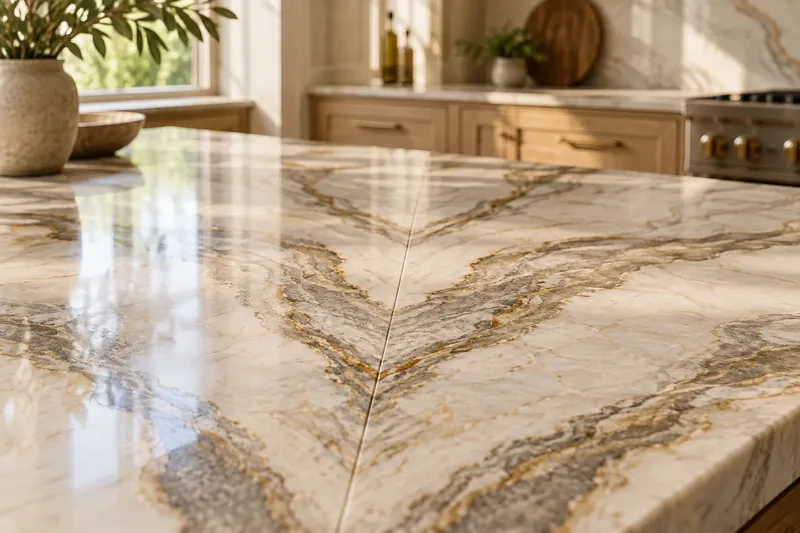
An etch is removed by restoring the surface, not by cleaning. We use polishing compounds or a series of abrasive pads, working through finer grits until the dull patch matches the surrounding shine.
On a small mark this is spot work, carefully feathered into the finish so there is no halo. On a top covered in marks, the better result comes from treating the whole surface so the sheen is even, because a single freshly polished patch on an old top can look like a mirror in a dull field.
A honed finish is treated differently from a polished one. The aim is the same finish that was there before, so a matte top stays matte. We say in advance which finish you will end up with, and we test on a hidden spot before we start on the main surface.
We always try a hidden corner or the underside of an edge first, so you can see what the polished spot looks like before we do the rest.
Poultices for Stains
A stain cannot be polished away, because it sits below the surface. It has to be drawn out.
The method is a poultice, a paste made from an absorbent white powder mixed with a chemical suited to the stain. It is spread over the mark, covered with plastic and left to draw the staining material up out of the stone and into the paste as it dries. Oil stains, organic marks such as coffee and wine, and rust each need a different mixture, so identifying the source of the stain matters.
Deep stains sometimes need more than one application. We say honestly when a mark is old enough that it may not come out fully, and we do not promise a result the stone cannot give.
A poultice is slow work and it rewards patience. Rushing it, or scraping the paste off early, leaves the stain behind, so we plan the visit so it is left to do its work.
Scratches and Dull Wear
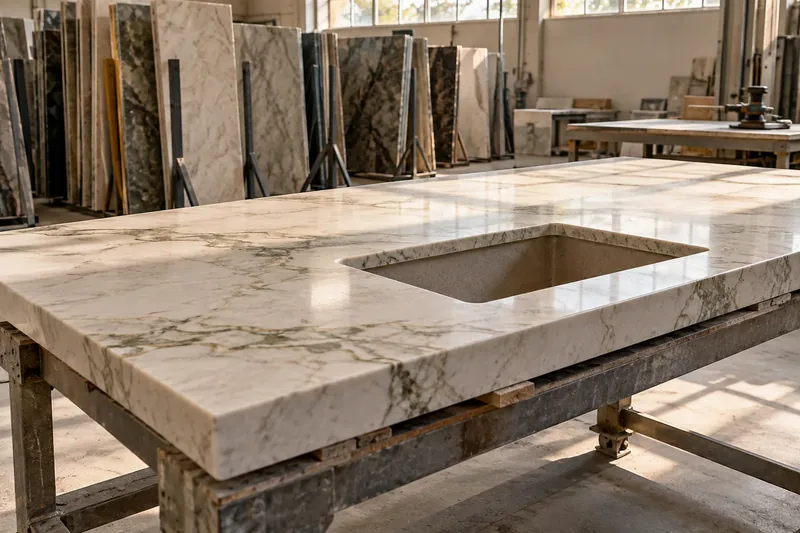
Scratches are honed out in stages. A fine scratch is a shallow groove that polishing can level, while a deeper one needs a coarser grit first and then a progression back up to the finish of the stone.
Wear in a high-traffic spot, such as the area in front of the sink, shows as an overall dullness, not a single mark. This is the same kind of surface wear as an etch and is dealt with the same way.
Hard water adds to the problem. Rancho California Water District reports an average hardness near 230 mg/L, about 13.5 grains per gallon, and the white film that leaves can be mistaken for a dull finish. We clean first, because sometimes the surface is fine and only the film needs to go.
Which Stones We Treat
Marble is the most common job, because it etches and stains most. Limestone and travertine behave in a similar way. Granite rarely etches, but it can stain, so it is more often a poultice job. Quartzite depends on the stone.
Engineered quartz does not take a poultice, because it is non-porous, and polishing it is not usually the right fix. If you have a mark on quartz, we look at what it is before suggesting anything.
On any natural stone, once it is restored we recommend a sealer so the next spill has time to be wiped off. We also explain which cleaners to use afterwards, because the wrong one starts the problem again.
Limestone and travertine tops, often found on fireplace surrounds and bathroom counters, are treated the same way as marble because they react to acid in the same manner.
What Restoration Costs
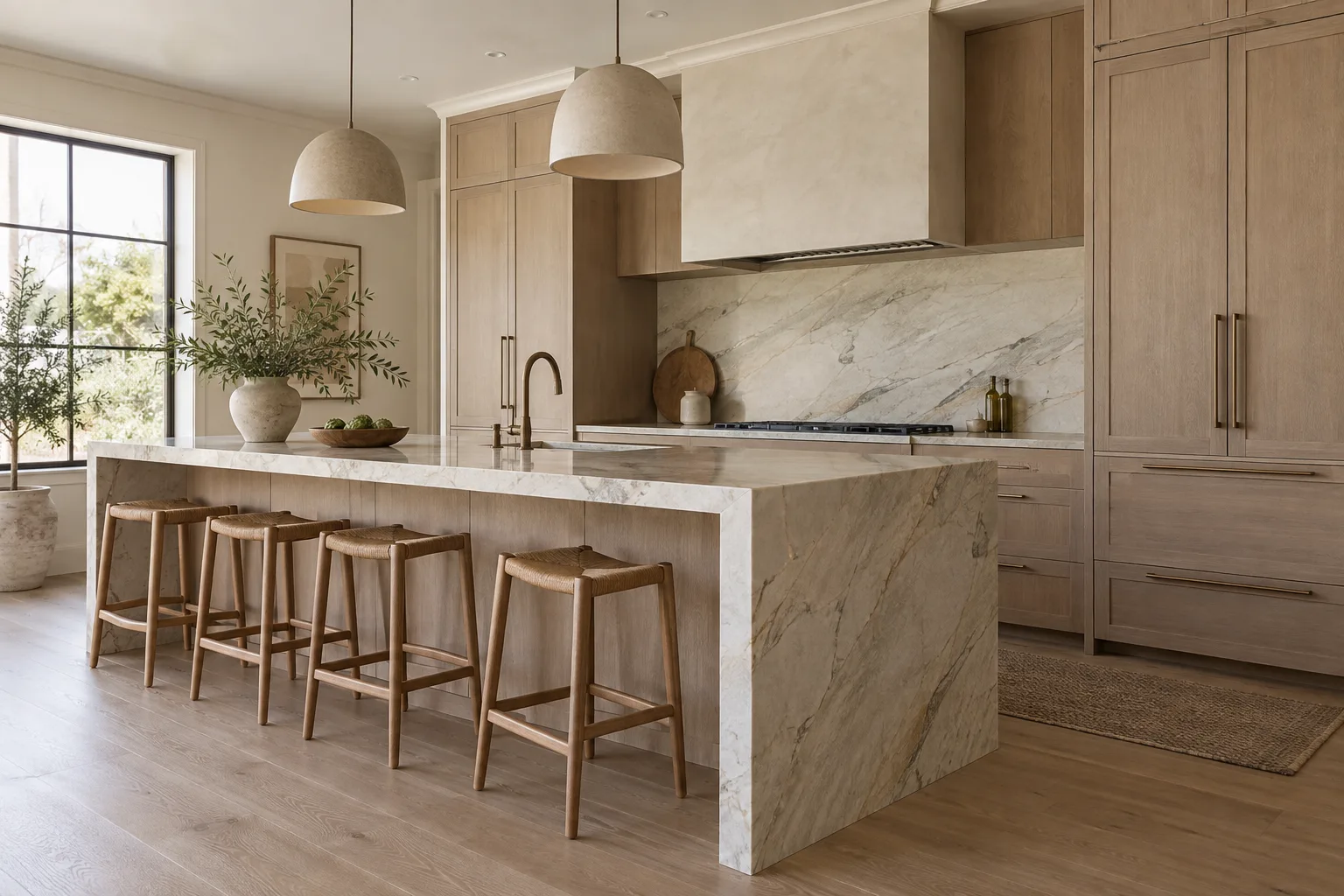
As a guide from industry ranges, stain, etch and scratch removal is typically estimated at roughly $200 to $600. The price depends on the size of the area, whether it is a few marks or the whole top, the stone, how deep the etching or scratching goes, how many stains need a poultice and whether the finish has to be matched to a honed look.
A full top restoration on a large island or bar costs more than spot work, and we quote it from a look at the surface.
These are estimates, subject to change once we see the stone and the marks, and the final price is whatever your written quote says. Call for a free estimate and a look at your marks.
Edges and Finishes


The process
Four Steps From Call to Countertop
No stone is cut until you have seen the slab and signed off on where the seams go.
Call or send the form
Tell us the room and the material you have in mind. Businesses and builders send drawings for a bid.
Pick the slab
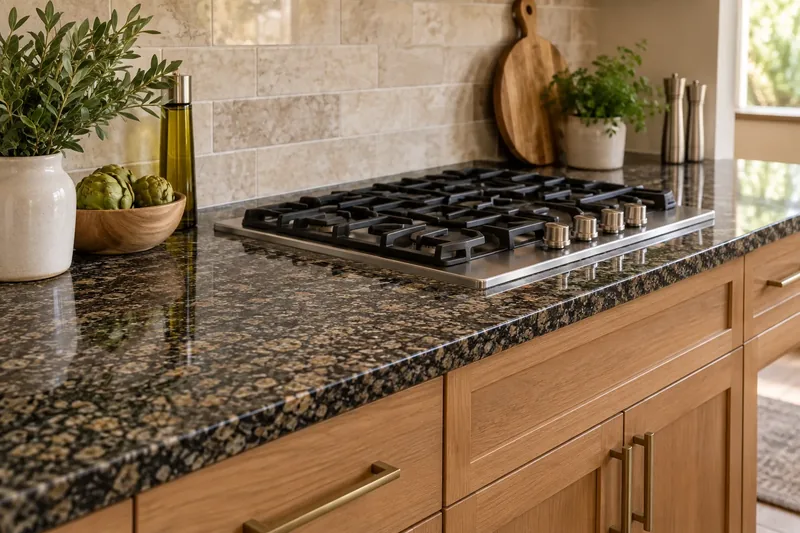
You choose the slab at the supplier, and we mark where each seam and cut will fall for your approval.
Measure and fabricate
We measure on your installed cabinets, then cut, edge and polish the tops in the shop.
Set the tops
The same crew sets the tops, mounts the sink, closes the seams and cleans up before leaving.

Service area
Towns We Install In
Questions
Stain, Etch & Scratch Removal: Common Questions
How can I tell an etch from a stain?
An etch is a dull patch that looks the same wet or dry. A stain is a darker mark that soaked in.
Can etches on marble be removed?
Yes. They are polished out with compounds or finer pads until the surface matches the surrounding stone.
What is a poultice?
A paste of absorbent powder and a suitable chemical that is left on a stain to draw it out of the stone.
Will wine always etch marble?
Wine is acidic and reacts with calcite, so it can etch marble quickly. Wipe it up fast, though sealer will not stop it.
Do you treat granite stains?
Yes. Granite resists acid but can absorb oils and coloured liquids, which are drawn out with a poultice.
Can you remove scratches?
Fine and moderate scratches can be honed out in stages and the finish restored.
Will a polished spot stand out from the rest?
It can on an older top, which is why we sometimes treat the whole surface so the sheen is even.
Does this work on quartz?
Quartz is non-porous and does not take a poultice. We look at the mark first and tell you what, if anything, will help.
How do I get an estimate?
Call us or describe the marks on the contact form. We visit for a free estimate and a test on a hidden spot.
Can marble look new again after restoration?
Etches and many stains come out, and the finish can be matched. Marble stays a soft stone, so new marks can form with use.
Ask us about stain, etch & scratch removal
A free measure for homeowners, and a written bid from drawings for businesses and builders.
Licensed, bonded & insured · License #585047. Calls only, we do not receive text messages.