Granite
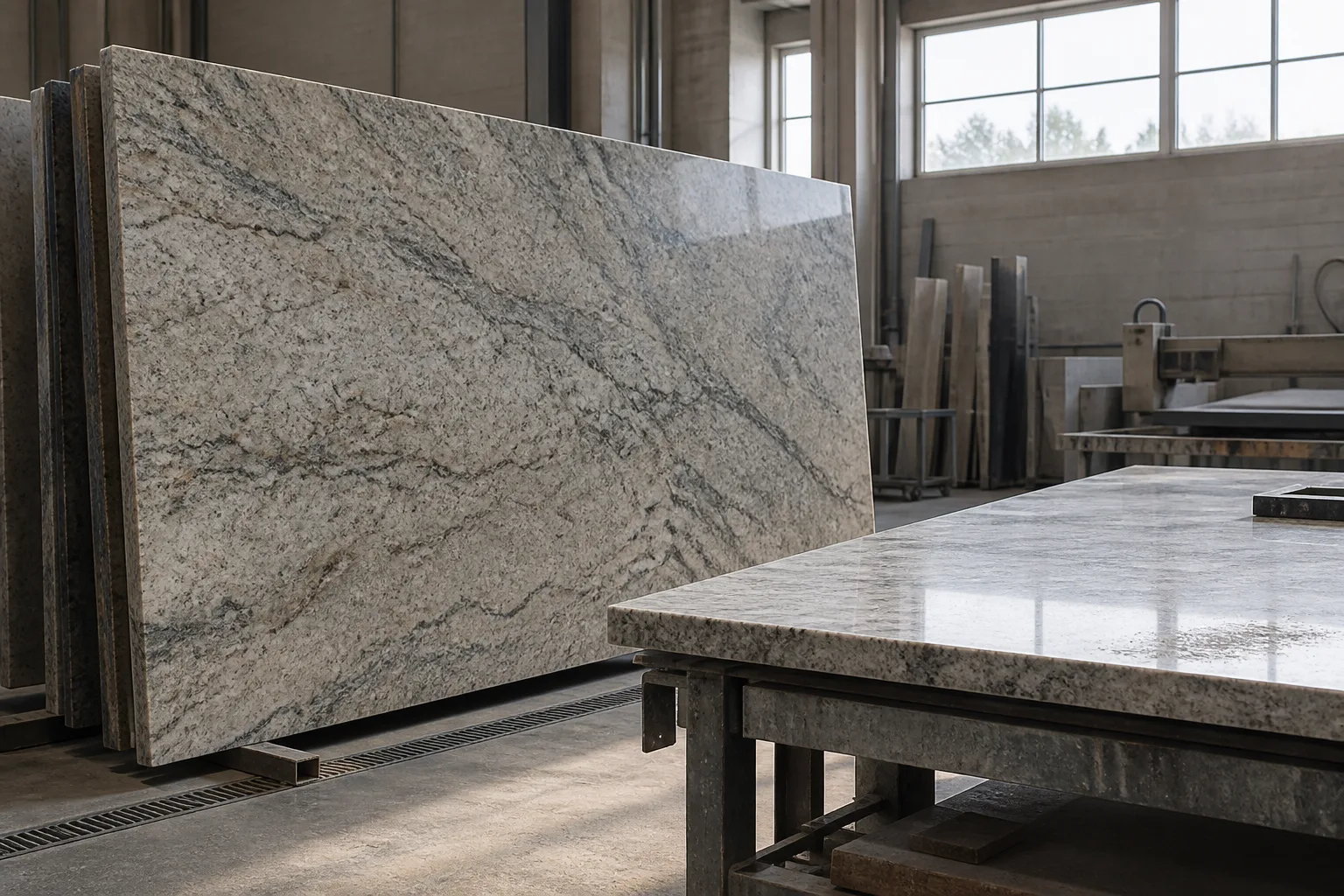
Most granite benefits from sealing, with lighter and more open stones needing it most.

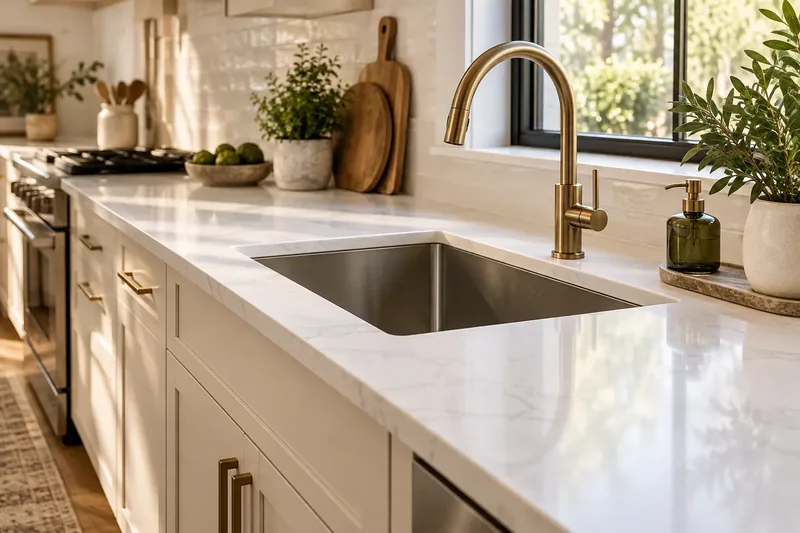
Temecula Custom Countertops is a trusted specialist in granite sealing in Temecula, CA and across Riverside County, specializing in granite, marble and quartzite countertop care. We offer stone cleaning and penetrating sealer application.
Get a free measure or a bid
Or call (951) 466-2371. Calls only, we do not receive text messages.
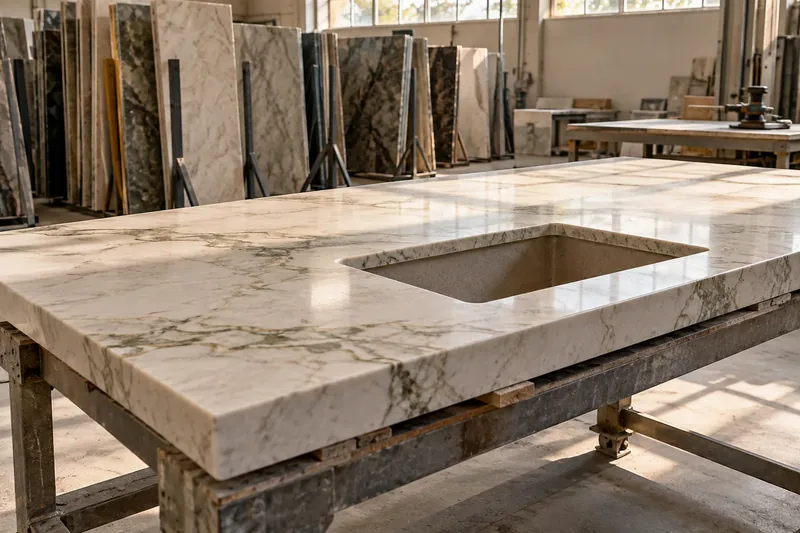
Our team provides a water absorption test before any work, delivering protection that matches how your countertop stone actually behaves for both residential and commercial projects. The same crew that templates and installs natural stone also seals it, so we know which slabs drink and which do not.
From a new island to a kitchen that has gone years without sealer, our team handles every detail. Serving Temecula, Fallbrook and Rainbow, we begin with a simple test on your own top.
How we work
Homeowners get a free measure. Wineries, restaurants, offices and builders get a bid from their drawings.
Before sealing anything, we test it. Put a few drops of water on the stone and watch. If the drops bead up and sit on the surface, the stone is repelling and the sealer is working. If the stone darkens and the water soaks in within a few minutes, it is absorbing, and it is time to seal.
The trick is to test in several places, not one. The area around the sink and the cooktop gets the most wear and the most cleaning, so it usually goes first. The far end of the top may still be fine.
The test matters because not every top needs sealing, and a sealer put on a stone that is already protected only leaves a film to wipe off. We would rather run the test and tell you to wait than charge you for work you do not need.
A new top is not automatically sealed, either. Some fabricators seal at the shop and some do not, and the finish on the stone can hide how thirsty it is. A drop test on installation day gives you a baseline to compare against later.
Natural stone is full of tiny pores. Granite has poor permeability across the body of the stone but can take liquid through its fine cracks and fractures, and marble is described as soft and porous, so it stains easily from coloured liquids.
A penetrating sealer, often called an impregnator, soaks into those pores and fills them with a repellent. It does not sit on top like a varnish, so it does not change the look or the feel of the stone, and it does not peel.
Spills still need wiping up. A sealer buys you time, so wine, oil or coffee sits on the surface instead of sinking in, which makes the difference between a wipe and a stain.
Different sealers suit different stones. A dense, dark granite wants a light-bodied product that can find its way into tight pores, while a more open stone takes a heavier one. We choose to suit the slab in front of us and test it on a hidden spot first.
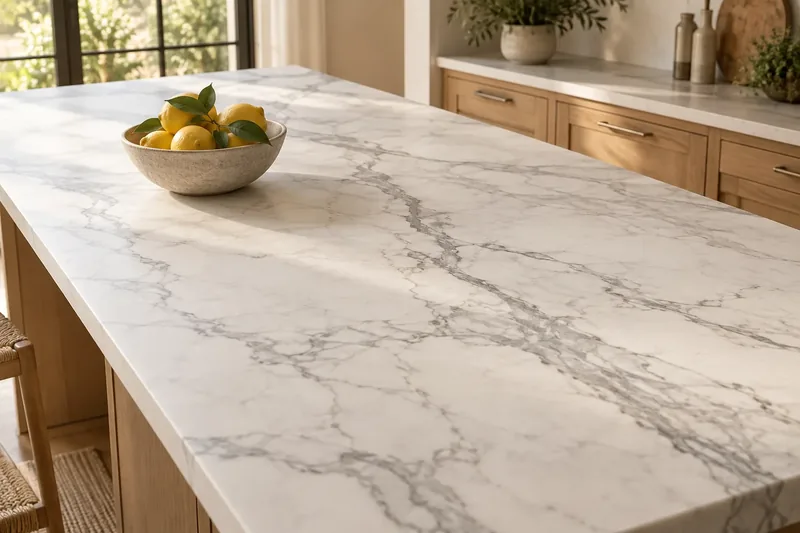
This is the part that causes the most disappointment. Sealer slows staining. It does not stop acid etching.
An etch is not something that soaked in. Acid such as lemon juice, vinegar or wine reacts with the surface of calcite stone like marble and dissolves it microscopically, leaving a dull patch. A sealer sits in the pores below that surface, so it cannot protect the finish from the reaction.
Sealing also does not make stone scratch proof, heat proof or crack proof. A hot pan, a sharp impact or a heavy load is still a risk. If you have a marble top and want it to look as it did on day one, sealing helps with stains but the etches are a matter for polishing, which is a different job we also do.
That is also why we recommend a gentle routine. Wipe acidic spills straight away, use coasters under wine and citrus drinks, and keep the stone clean so nothing sits on it long enough to do harm.
Temecula water is hard. Rancho California Water District reports total hardness averaging about 230 mg/L for its imported supply, roughly 13.5 grains per gallon, and hard water leaves a mineral film wherever it dries.
Those marks are often mistaken for stains. They are deposits sitting on the surface, the same off-white scale you find on a faucet, and they come off with a proper cleaner rather than a sealer. A stain is liquid that has gone into the stone, and it shows as a dark patch that does not wipe away.
The distinction decides the fix. A white ring around the tap is a cleaning job. A dark ring under a glass is a sealing and possibly a poultice job. We tell you which you have before we start.
Cleaning habits matter as much as the sealer, because a film of soap or mineral residue can mask how the stone is really behaving.
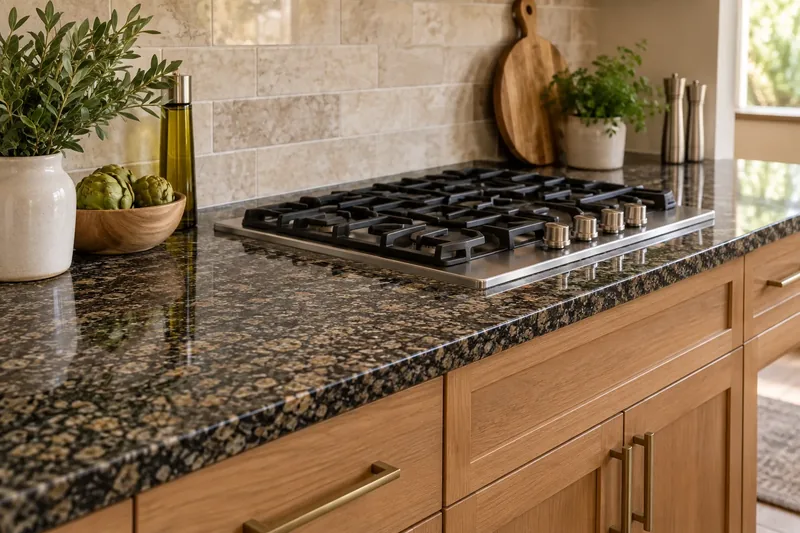
Not all stone behaves alike, and the right answer depends on the material.
Most granite benefits from sealing, with lighter and more open stones needing it most.
Marble is soft and porous, so it needs sealing, but sealing alone will not keep it flawless.
Behaviour varies from stone to stone, which is exactly why the water test comes first.
Engineered quartz is non-porous, so a penetrating sealer is not needed. Porcelain slab is the same.
We clear the top and clean it so there is no film or residue for the sealer to trap. Then we run the drop test, mark where the stone is absorbing, and apply the impregnator so it can be taken up evenly.
Excess is wiped from the surface before it can dry, so there is no haze, and the sealer is left to take before the top goes back into use. We tell you plainly how long to keep it clear.
We also show you how to check it yourself with a drop of water and which cleaners to avoid. Harsh acids and abrasive powders wear down the protection and dull the polish, so a mild stone-safe cleaner is the right choice for daily wiping.
Because resealing needs depend on use, the cleaners you choose and how hard the water is, we do not promise a fixed interval, and the drop test is your guide.
On a bar top or an outdoor island we make the same checks, but also look at where the surface takes the most spills, because that is where the sealer is tested hardest.
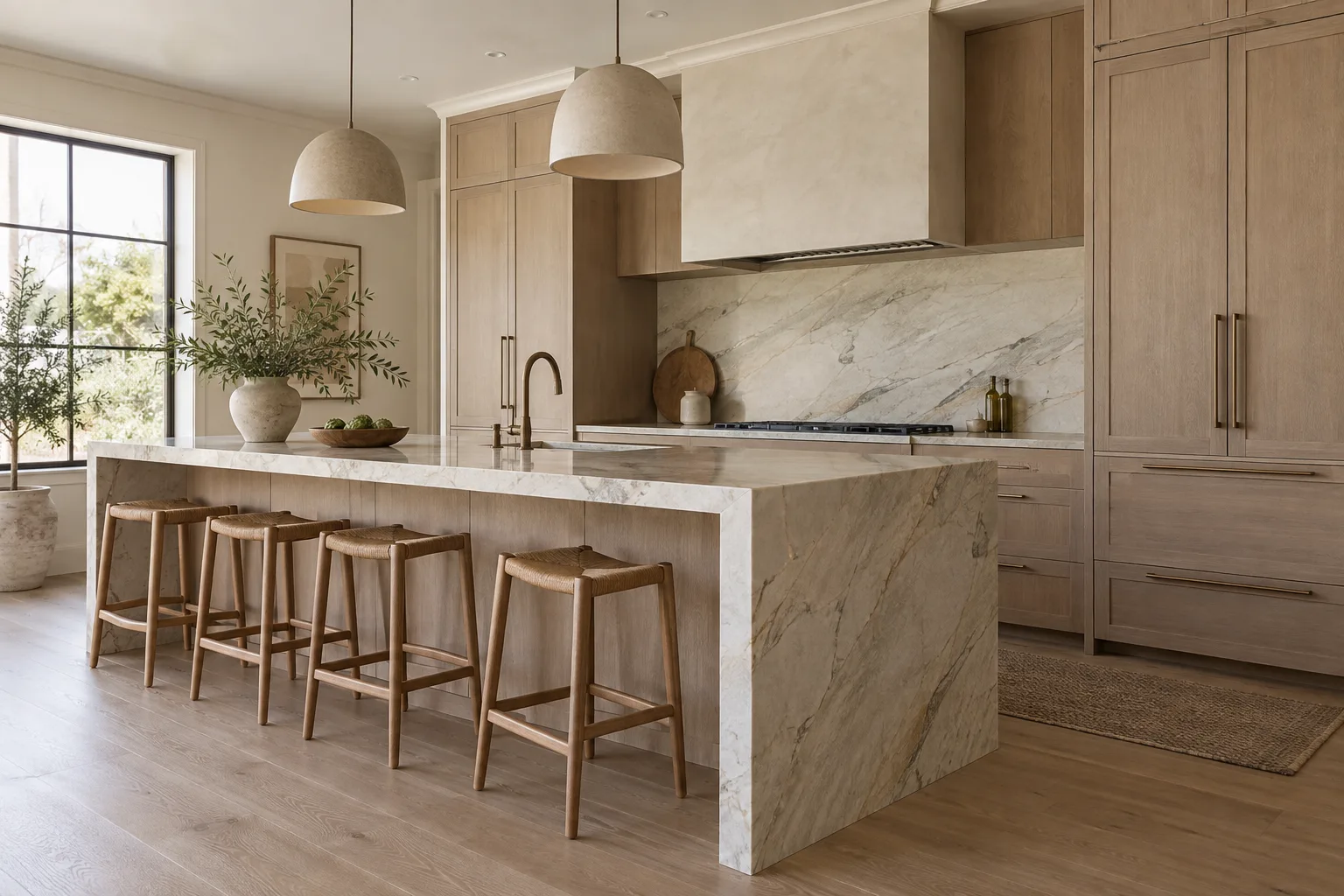
As a guide from industry ranges, professional countertop sealing is typically estimated at roughly $150 to $400. The price depends on the square footage of stone, how many pieces and surfaces there are, whether a backsplash, a bar top or an outdoor island is included, the stone and how thirsty it is, and whether a deep clean comes first.
A top that has gone unsealed for a long time, or that has stains already, may need cleaning or a poultice before the sealer goes on, which adds to the scope.
Please read these as estimates, subject to change with the stone and the preparation it needs, because the final price comes from your written quote. Call for a free estimate and a water test on your own stone.
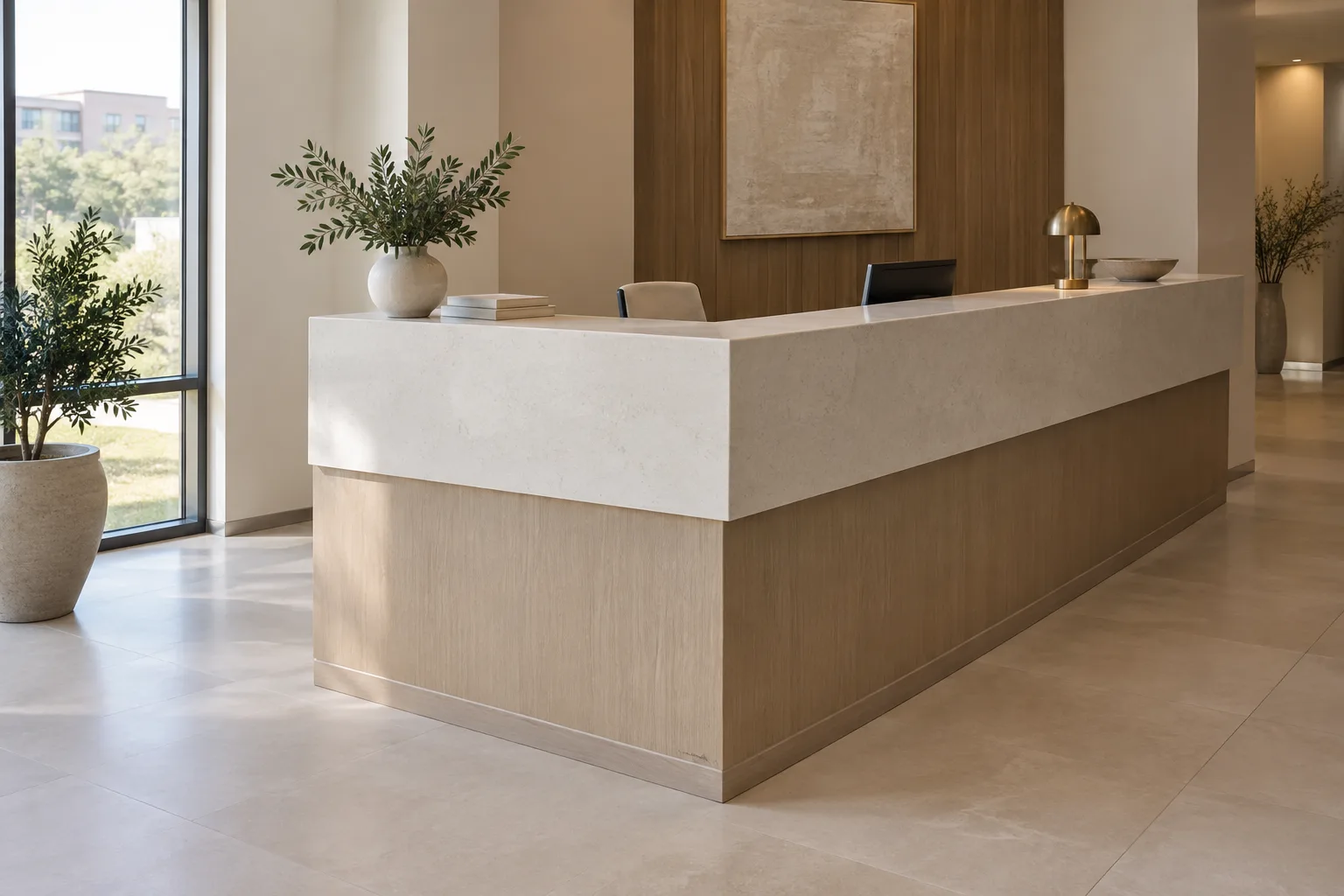
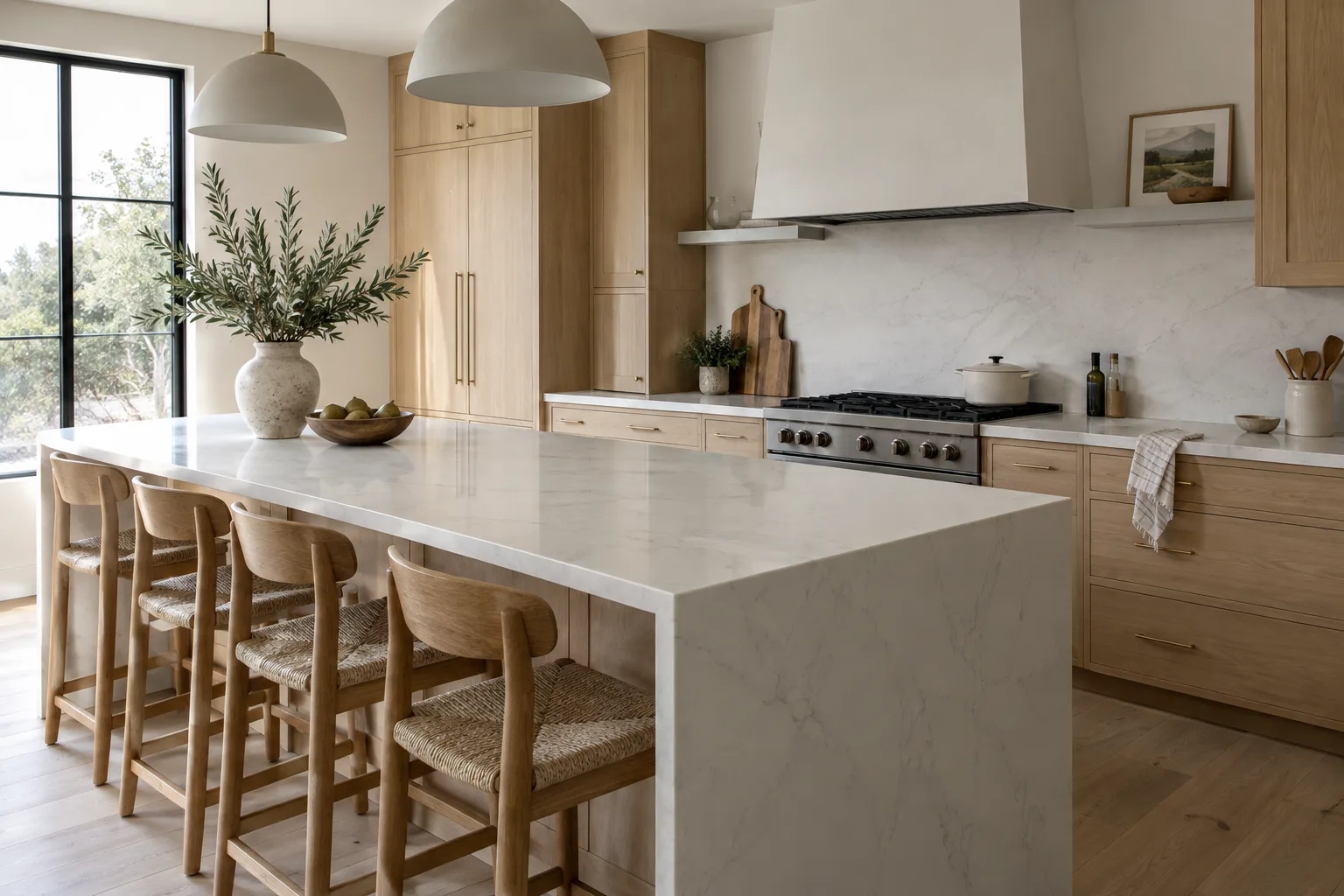
The process
No stone is cut until you have seen the slab and signed off on where the seams go.
Tell us the room and the material you have in mind. Businesses and builders send drawings for a bid.
You choose the slab at the supplier, and we mark where each seam and cut will fall for your approval.
We measure on your installed cabinets, then cut, edge and polish the tops in the shop.
The same crew sets the tops, mounts the sink, closes the seams and cleans up before leaving.
Also from our shop
Questions
Do the water drop test. If the stone darkens and the water soaks in, it is absorbing and should be sealed.
No. Sealer slows staining but does not protect the polished surface from acid. Etches are polished out instead.
A white or crusty ring is usually mineral scale left by hard water. A dark patch that does not wipe off is a stain.
A penetrating sealer soaks in and leaves the finish as it was. Some darken the colour slightly, which we test first.
No. Engineered quartz is non-porous, so a penetrating sealer is not needed.
It depends on the stone, your cleaners and use, so we go by the drop test rather than a calendar.
Yes. Outdoor granite is sealed the same way, and we check it against the water test as well.
Avoid it. Acids can dull marble and wear down a sealer, so a mild stone-safe cleaner is better.
Call or send a message. We test your top and give a free estimate.
Not always. Do a drop test when it is installed so you know where you stand.
A free measure for homeowners, and a written bid from drawings for businesses and builders.
Licensed, bonded & insured · License #585047. Calls only, we do not receive text messages.