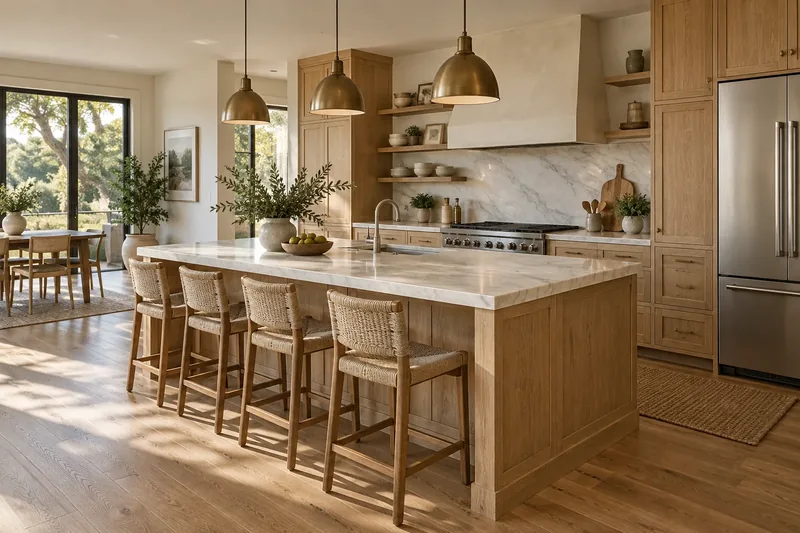
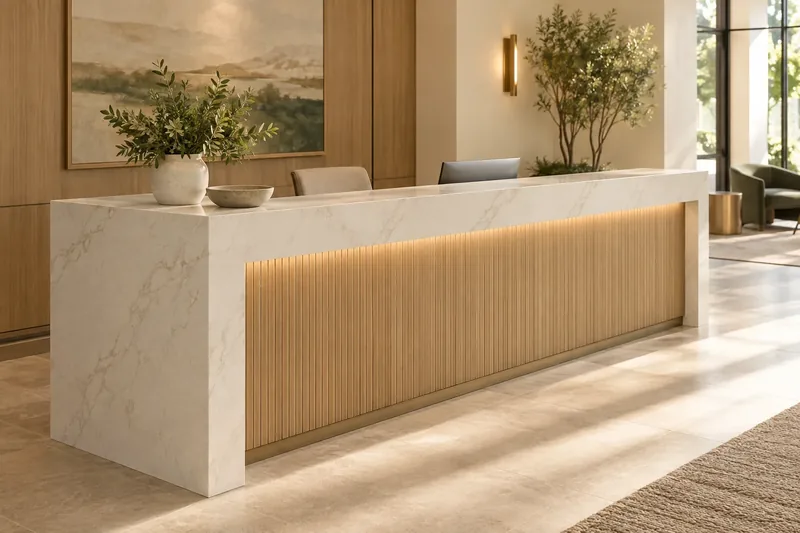
Quartz
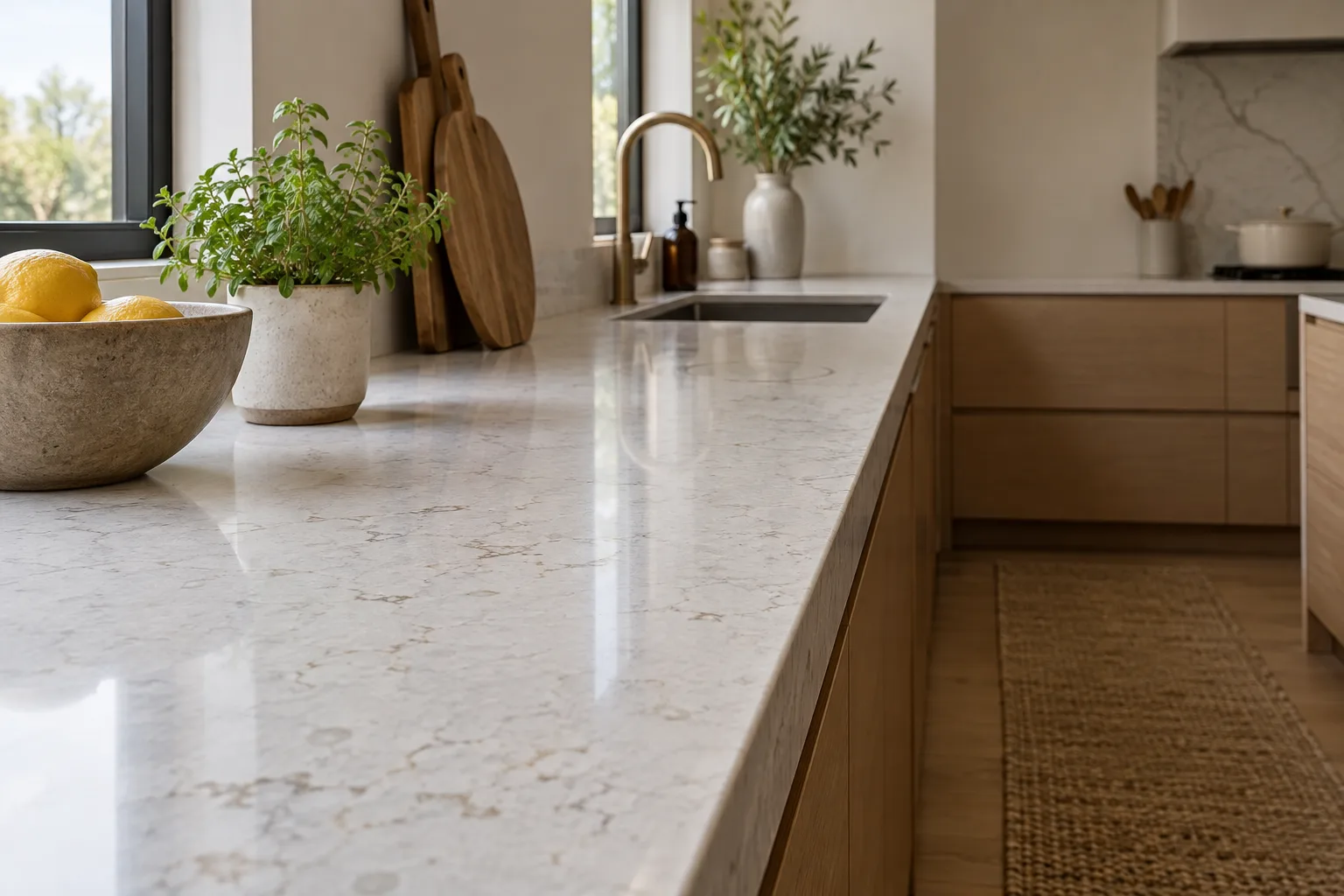
Engineered quartz is non-porous, so wine does not soak in, and it needs no sealer. It suits an indoor tasting bar where spills are constant. It should be kept out of direct sun and away from very hot equipment.

Temecula Custom Countertops is a specialist in winery tasting room countertops in Temecula, CA and the wider Riverside County wine country, specializing in tasting bar tops, pour station counters and retail and barrel room tops. We offer patio bar tops and event space counters.
Get a free measure or a bid
Or call (951) 466-2371. Calls only, we do not receive text messages.
Our team provides bids from your floor plan and finish schedule, delivering durable, stain-resistant countertop surfaces for both residential and commercial projects. We return shop drawings for every bar run, with seams, overhangs and edges marked, and nothing is cut until the winery and its contractor have approved them.
From choosing a stone that shrugs off a spilled glass of red to timing the install between two busy tasting weekends, our team handles every detail. Serving Temecula, Fallbrook, Valley Center and Rainbow, we plan around your release dates and events.
How we work
Homeowners get a free measure. Wineries, restaurants, offices and builders get a bid from their drawings.
The Temecula Valley AVA was designated in 1984 and now holds somewhere between 40 and 50 wineries, most of which pour for guests at a bar. That bar is the hardest-working surface in the building. It takes hundreds of glasses set down and picked up every day, spilled wine, spit buckets, chilled bottles sweating onto the stone, and guests leaning their weight on the edge for an hour at a time.
Wine is the specific problem. It is acidic, and red wine carries strong pigments. An acid-sensitive stone such as marble or limestone etches where wine sits, leaving dull rings that no wipe removes. A porous stone that has not been sealed can take up the colour and hold a pink or purple stain. The cleaning products used at closing add their own chemistry.
So a tasting room top is chosen first for resistance to acid and staining, second for edge strength, and only then for looks. Fortunately several handsome surfaces meet all three tests.
Each material has a place in a winery, and the right choice depends on where in the building the top sits.
Engineered quartz is non-porous, so wine does not soak in, and it needs no sealer. It suits an indoor tasting bar where spills are constant. It should be kept out of direct sun and away from very hot equipment.
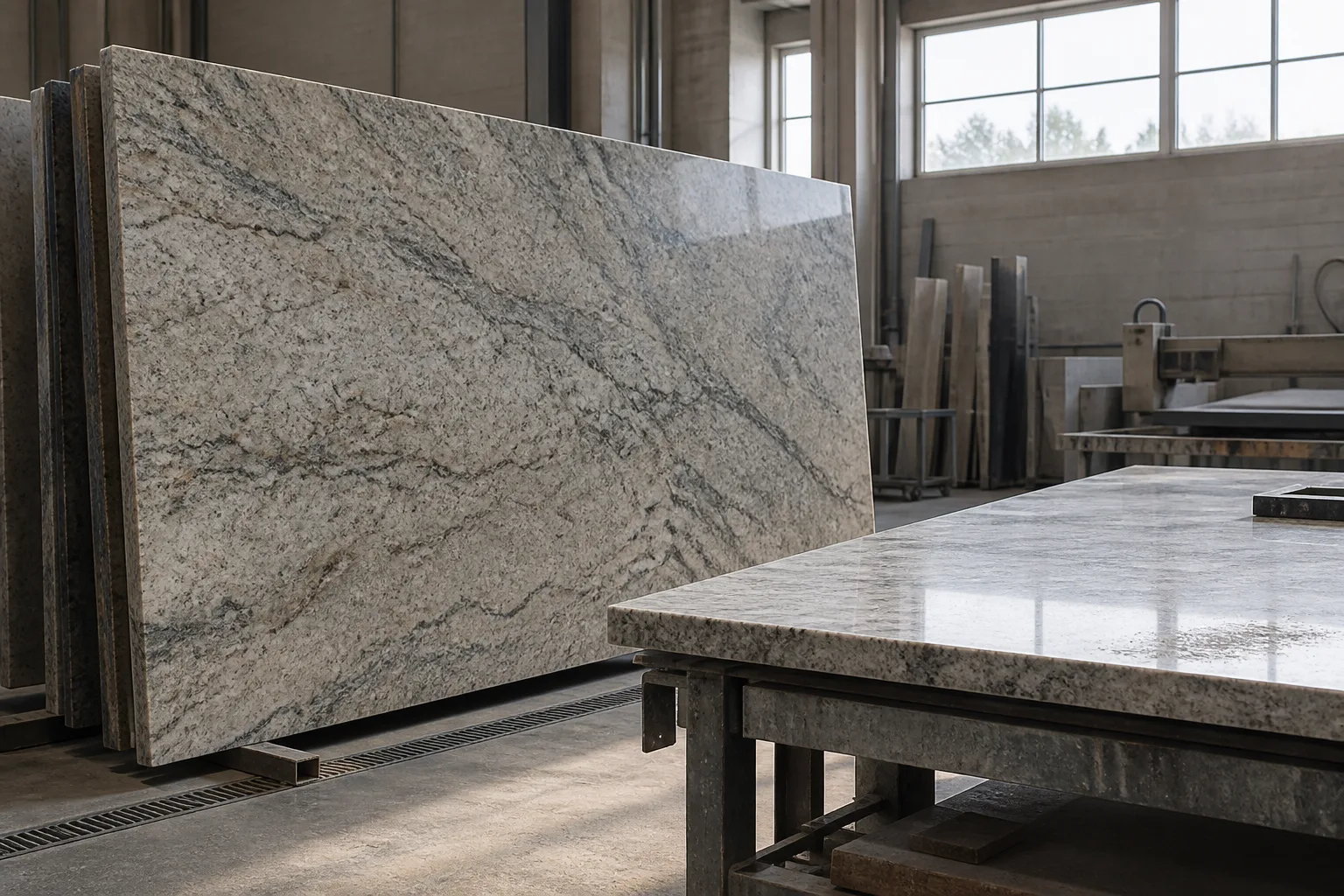
Most granites resist acid well and are hard enough for heavy glassware traffic. A sealed granite suits both indoor bars and covered patio bars, and its natural variation fits a rustic tasting room.
Porcelain resists stains, heat and ultraviolet light, which makes it a strong choice for an outdoor pour station or a patio bar facing the vineyard.
Both look the part, but both etch with wine. If a design calls for them, we suggest them for a back wall, a display shelf or a feature where drinks are not poured.
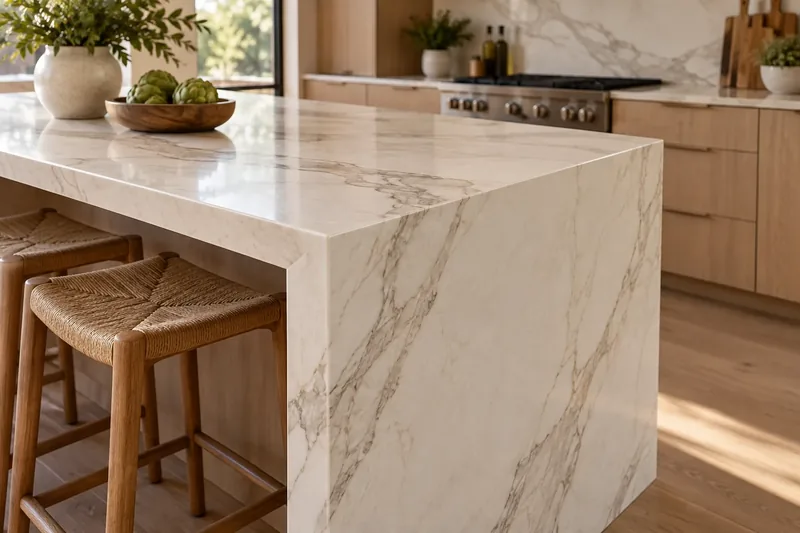
A tasting bar is a standing counter, and the people standing at it lean. That puts load on the front edge and on any overhang that projects past the cabinet or the bar die wall. Stone is strong in compression but can crack if a long overhang is left unsupported, so the support is part of the design.
For a bar with a drop-down service side, the upper guest counter and the lower work counter are drawn together so the joint between them is clean and easy to wipe.
Most tasting rooms in the valley are busiest on weekends and around release events, so the install is planned for the quiet part of the week.
The measure is taken on the finished bar die wall or cabinetry, early in the morning before guests arrive. The tops are then cut and polished in the shop, which is where most of the time goes, and the tasting room carries on as usual. On install day the crew sets the tops, fits the sinks, closes the seams and cleans up, usually within the closed hours the winery gives us.
For a winery adding a new building or a patio bar, the countertop schedule is fitted into the general contractor's plan so the stone arrives once the framing, plumbing and electrical rough-ins are done.
Harvest is worth planning around too. Late summer and early autumn are when the crush and the busiest visitor weekends tend to overlap, and few winery owners want a crew in the building then. Booking the measure during a quieter month, with drawings approved well ahead, lets the tops be fabricated and waiting so the install can happen on the first closed day that suits you. If the project includes a new outdoor bar, the stone can be set once the patio cover and the pour station plumbing are finished, without holding up the indoor work.
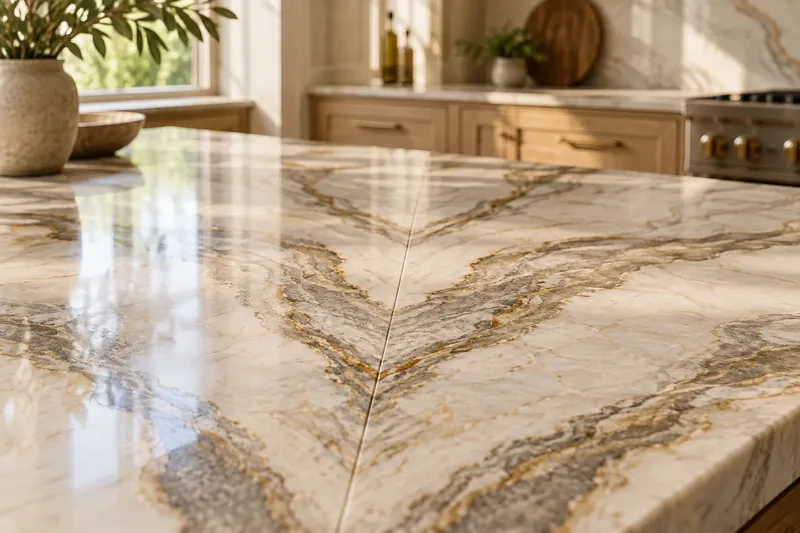
A winery usually has more counters than the bar. A retail area needs a checkout counter and display surfaces. A barrel room or private tasting room may have a long communal table top or a sideboard for pours. An event space or wedding venue may have a catering counter and a bar of its own.
These spaces see less daily abuse than the main bar, so they can carry a more decorative stone. A bookmatched slab on a feature wall behind the bar, or a quartzite table top in a private room, gives the building a focal point without putting a delicate stone under constant spills.
Planning every counter in the building together lets us buy slabs from the same lot, keep the edges consistent, and finish the whole property in fewer trips.
As a guide drawn from industry ranges for bar and restaurant tops, a tasting room or winery bar package is typically estimated at roughly $10,000 to $60,000. Where a project sits in that range depends on the length of the bar runs, the stone, the number of seams and cutouts, the supports needed under overhangs, the number of separate counters, and whether the work is done in one visit or in phases.
To price it we need the floor plan with the bar and counter runs, the finish schedule naming the material and edge, the sink and equipment list, and any outdoor counters. Send those and we return a written bid and, once accepted, shop drawings for approval.
These figures are estimates only and subject to change with stone prices and the scope of your drawings. The final price is the one in our written bid.
The process
No stone is cut until you have seen the slab and signed off on where the seams go.
Tell us the room and the material you have in mind. Businesses and builders send drawings for a bid.
You choose the slab at the supplier, and we mark where each seam and cut will fall for your approval.
We measure on your installed cabinets, then cut, edge and polish the tops in the shop.
The same crew sets the tops, mounts the sink, closes the seams and cleans up before leaving.
Questions
It can stain a porous stone that is not sealed, and it will etch marble or limestone. Quartz, porcelain and a sealed granite resist both, which is why they are the common choices for a pouring surface.
Yes. We measure early in the morning and set the install for a closed day or the quietest weekday you give us.
An eased or lightly rounded edge resists chipping from glassware better than a sharp square edge, and it is more comfortable to lean on.
Usually, because slabs have a maximum size. We place seams away from the main pour positions, support them underneath and show them on the shop drawings for approval.
Sometimes. Granite works in both places. Quartz is best kept indoors because most quartz is not made for direct sun, so a patio bar may use porcelain instead.
Yes. We need the bar die wall finished and the sink, glass rack and spit bucket positions confirmed before the measure.
Yes. Measuring every counter together saves trips and lets us match the stone across the building.
The floor plan with counter runs, the finish schedule, the equipment list and your preferred install window.
With a pH-neutral cleaner suited to the stone. Harsh acidic or bleach cleaners can dull natural stone and wear down a sealer over time.
A free measure for homeowners, and a written bid from drawings for businesses and builders.
Licensed, bonded & insured · License #585047. Calls only, we do not receive text messages.