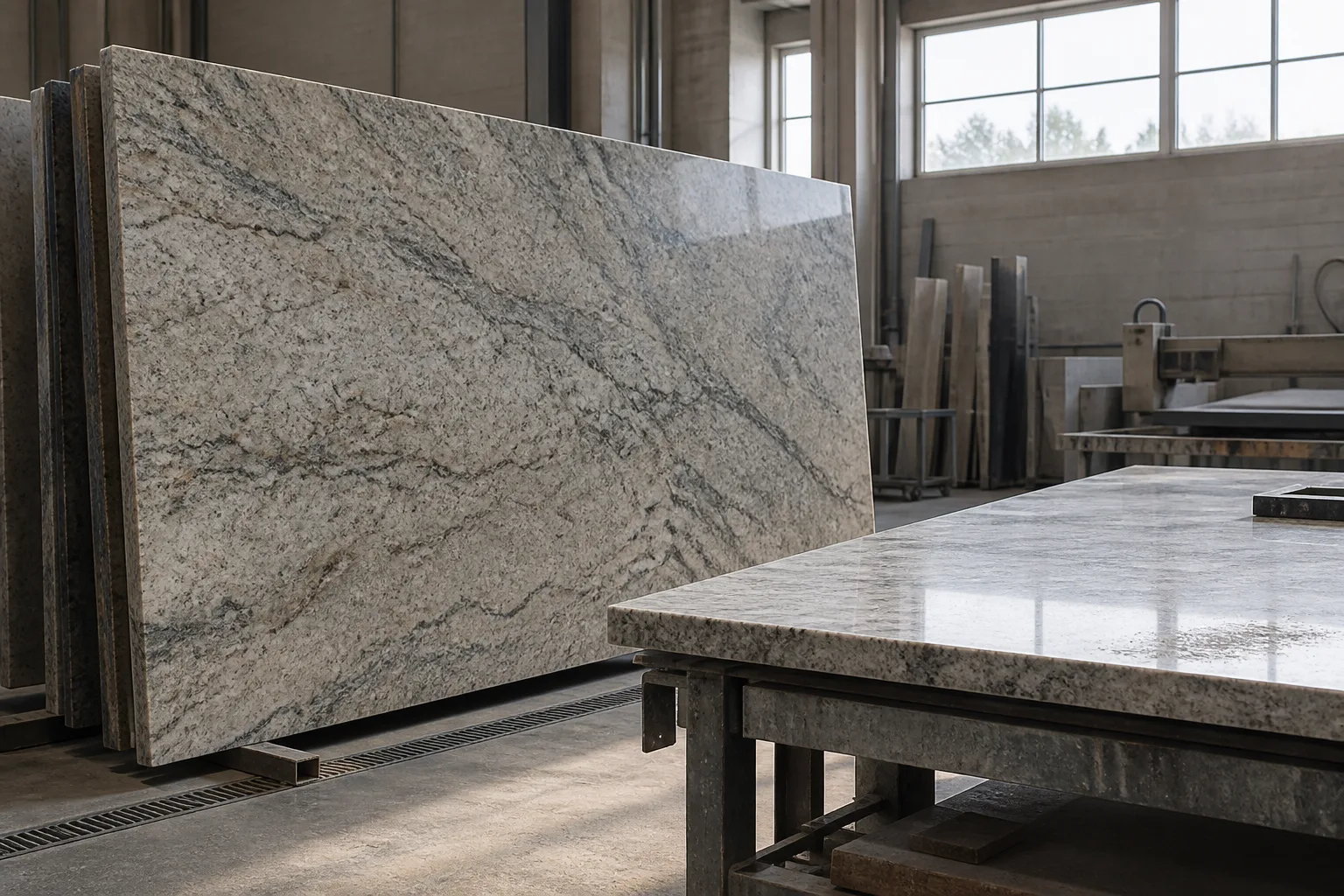
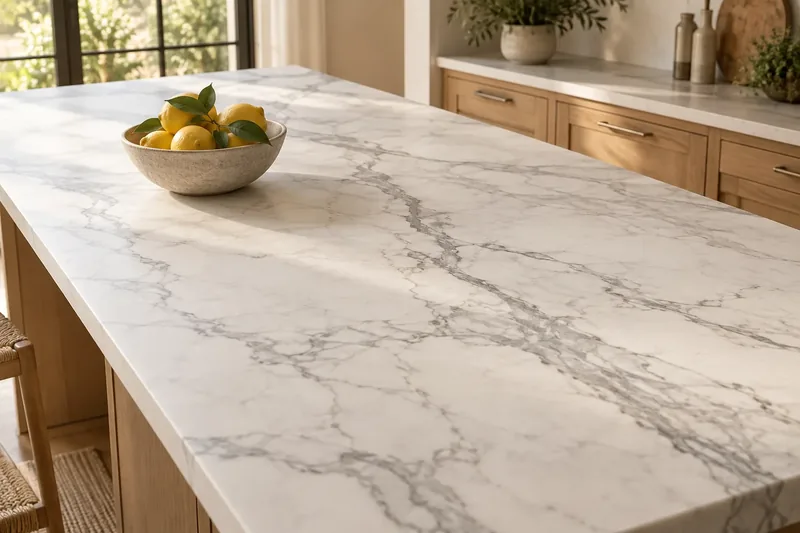
Walk the whole slab
Check the veining end to end, any pits or fissures, and the spots where the colour shifts.

Temecula Custom Countertops is a leading specialist in granite countertops in Temecula, CA and across Riverside County, specializing in kitchen islands, outdoor kitchen tops and bathroom vanities. We offer slab selection at the supplier's yard and edge work cut to your design.
Get a free measure or a bid
Or call (951) 466-2371. Calls only, we do not receive text messages.
Our team provides measuring, sealing guidance and installation, delivering durable stone countertops for both residential and commercial projects. Our own crew handles the template, and we lay out the seam layout on the slab you picked before anything is cut in the shop.
From matching a vein across a seam to sealing the stone around a sink, our team handles every detail. Serving Temecula, Fallbrook and French Valley, we take you from the first measure to the last wipe-down of the finished top.
How we work
Homeowners get a free measure. Wineries, restaurants, offices and builders get a bid from their drawings.
Granite is a coarse-grained igneous rock made mostly of quartz, feldspar and mica, and it forms from slowly cooled magma deep underground. That shared origin is why it takes a fine polish and holds up to heavy use. It is also why two slabs sold under the word granite can behave very differently.
The mineral mix changes the look, and it changes the porosity. A dense, fine-grained granite barely absorbs a spill, while a coarser stone with larger crystals and natural fissures lets liquid in more easily. Two stones that look equally dark across a showroom can need very different upkeep.
So the first job when you shop is not colour but how the stone takes liquid. We test a sample from your slab rather than guess from its name.
Finish matters as well. A polished face is glossy and shows water marks readily. A honed face is matte and quieter. A leathered face has a textured feel that tends to hide fingerprints. Each is the same stone with a different surface, and each takes sealer a little differently, so we bring samples and talk it through before you commit to a look.
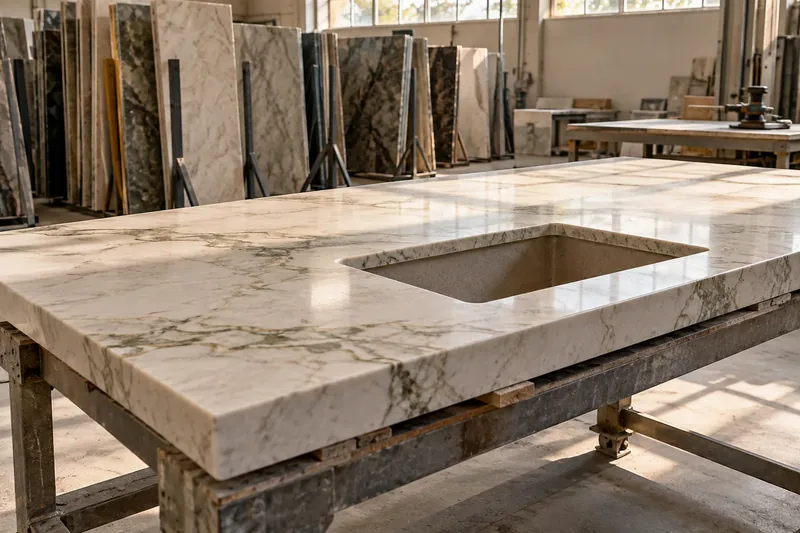
A small sample square tells you very little about a whole slab. Granite moves: a pattern that looks uniform in a palm-sized piece can run in a dramatic band across the full length. That is why the slab is chosen at the supplier's yard, standing in front of the piece you will actually own. We go with you or meet you with the measurements, and we look at it the way a fabricator does.
Check the veining end to end, any pits or fissures, and the spots where the colour shifts.
A damp rag shows what the polished stone will look like, and the finished top will look closer to the wet slab.
Where a seam will fall, where the sink opening sits and how the pattern lines up across a corner all depend on this one piece. We draw the seam layout on the slab you pick, and you approve it before the shop saw touches the stone.
Granite is commonly offered in different thicknesses, and the edge you want is partly decided by the one you choose.
Natural stone is sealed so that spills sit on the surface long enough to be wiped up. Modern impregnating sealers soak into the stone rather than film over it, which is why they last longer than the old surface coatings.
How often you reseal depends on the stone, not the calendar. Kitchen granite is often resealed every year or three, and a dense slab may go much longer. The check is simple. Put a few drops of water on the surface and watch. If the water beads, the seal is holding. If it soaks in and darkens the stone, it is time.
Temecula adds a second factor. The Rancho California Water District reports hardness of about 230 mg/L in its imported water, and hard water leaves a pale mineral film around a faucet and along the sink edge. On dark polished granite the film shows more clearly than on a busy pattern. A quick wipe with a soft cloth after use keeps it from building, and a stone cleaner made for natural stone removes what you miss. Harsh acids and abrasive powders dull the polish and wear down the sealer, so they stay in the cupboard.
With long, hot, dry summers and mild winters, Temecula homes spend a great deal of the year outdoors, and the patio kitchen is the room many families use most. Granite suits that job better than most surfaces for a few reasons.
One practical note. A dark polished granite in full afternoon sun gets hot to the touch, so a lighter stone or a shaded run is worth thinking about beside a seating bar. Outdoor tops also need a plan for drainage, with a slight fall away from the house and sealed edges at every cutout.
Indoors, granite earns its place on islands, perimeter runs and bathroom vanities in the master-planned neighbourhoods that Temecula is known for.
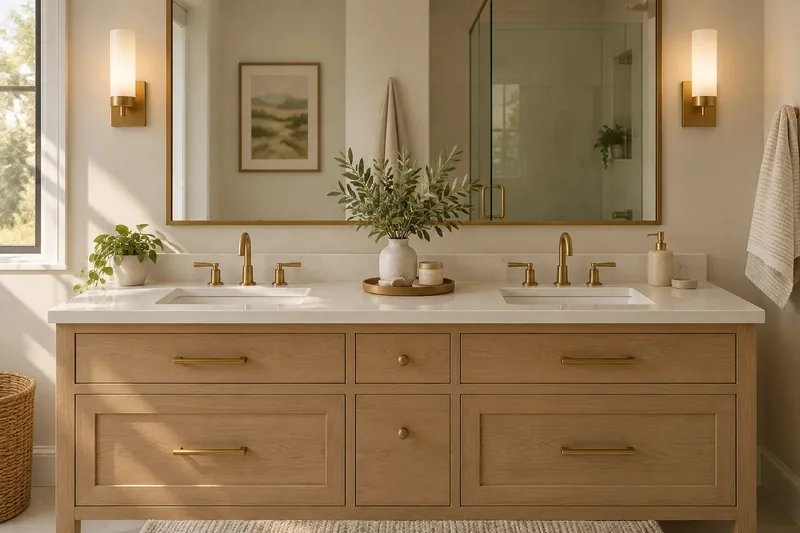
Bathrooms are the other place granite does well. A vanity top sees toothpaste, hair products and constant splashes, and a sealed granite surface shrugs most of that off. The same slab can run from the kitchen into a primary bath, which keeps a house feeling of a piece.
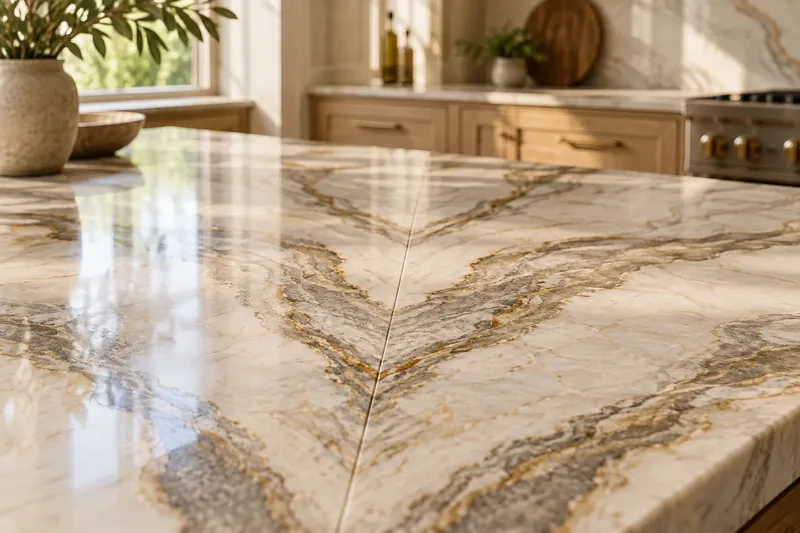
The fabrication details decide how a granite top looks once it is in. We cut every piece wet in the shop, which keeps the stone cool, the edge clean and the dust down.
Edge profile is the first choice. A straight eased edge is crisp and modern. A rounded edge is gentler around children. A bevelled or ogee edge suits a more traditional kitchen. Thicker built-up edges add weight to the look without the weight of a full thick slab.
Seams are unavoidable on long runs, because slabs have a finite size. We place them where the stone will stay dry and supported, away from the sink and the dishwasher opening, and we keep the grain and veining flowing across the joint. Cutouts for sinks, cooktops and faucets are polished smooth so water cannot track in at a raw edge. Every cutout is measured from your actual appliance and fixture, not a catalogue drawing.
Backsplashes come last. A full-height granite splash keeps the seam count down and gives the wall behind the cooktop the same protection as the top, while a short splash leaves room for tile.
As a guide from industry ranges, installed granite is typically estimated at roughly $40 to $100 per square foot, with rarer stones and complex layouts above that. Several things move your number within the range.
These figures are estimates and subject to change with slab pricing and the details found at the measure. The written quote sets the final price, and a free measure is how you get it.
Granite rewards a light routine. Wipe spills soon, particularly oil, wine and citrus. Clean with warm water and a soft cloth or a stone-safe cleaner. Dry the area around the faucet to stop the mineral film that hard water leaves behind.
Set a trivet under pots straight from the burner, mostly to protect the area near a seam. Use a cutting board, since a knife will dull before the stone is marked. Run the water drop test once a year and reseal when the stone starts to drink. If a chip or a stain appears, call or describe it on the form and we will tell you whether it can be repaired.
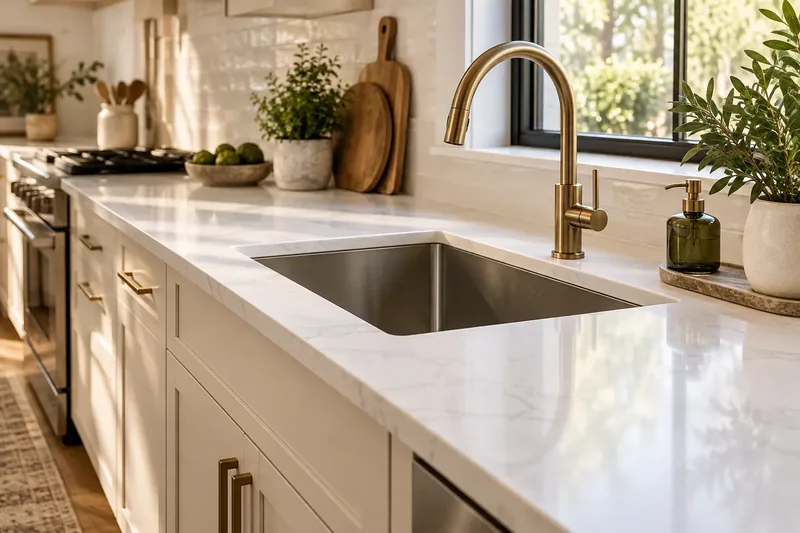
The process
No stone is cut until you have seen the slab and signed off on where the seams go.
Tell us the room and the material you have in mind. Businesses and builders send drawings for a bid.
You choose the slab at the supplier, and we mark where each seam and cut will fall for your approval.
We measure on your installed cabinets, then cut, edge and polish the tops in the shop.
The same crew sets the tops, mounts the sink, closes the seams and cleans up before leaving.
Questions
Yes. It is hard, tolerates heat and takes a fine polish. It does need sealing at intervals, which matters most around the sink where hard water sits.
In person, at the supplier's yard. Walk the full piece, look at it wet and dry, and let us draw the seam layout on it before it is cut.
Most do, some barely. A water drop test shows whether your stone is absorbing. We test a sample from your slab before it goes in.
Yes. It is not harmed by sun and handles heat, which is why it is a common choice for a patio kitchen or BBQ island. Very dark colours get hot in full sun.
Wipe the area dry after use and clean with a stone-safe product. Avoid vinegar and abrasive powders, which can dull the polish and wear down the sealer.
Away from the sink and dishwasher wherever the slab size allows. We draw them on your chosen slab and you approve the layout before we cut.
Often yes, and we can supply a matching stone splash instead. We look at the existing tile at the measure.
A free measure at your home. We check the cabinets, note every cutout and talk through stone choices, then the written quote follows.
A free measure for homeowners, and a written bid from drawings for businesses and builders.
Licensed, bonded & insured · License #585047. Calls only, we do not receive text messages.